Showing posts with label movie. Show all posts

Friday, August 11, 2017

The book was better.


I'm sure you have seen this illustration before on movie-versus-book discussions. With the sudden influx of movies based on books, I feel that I have to stress again how much richer and more satisfying reading a book is over seeing the movie adaptation.

When you read, you are creating your own movie. Your brain is more engaged and invested in a book. It is a very active process, combining the words you are seeing, processing, and understanding to create a full-color, vivid, on-demand movie in your mind. You are director and producer. You are in charge of makeup and costumes. You choose the locations and scenes. All of this in a split second.

That's why reading makes you smarter. Not only are you able to learn new words, but you are also engaging so much of your brain in sequential, systematic, and parallel ways - many times all at once!

There will never be a better movie-maker than your own imagination.

Some books to try instead of the movie:

The Handmaid's Tale by Margaret Atwood
One of my top 10 books, the story presents a challenge to the screen because it is primarily internal monologue. While the film and television series are true to the dystopian nature of the story, it is impossible to capture the parallel thoughts and feelings of the protagonist and the other handmaids as told in the double narrative-style of the book.

The Giver by Lois Lowry
Another one of my faves, this is the first book in a quartet. While the film adaptation, again, presents the general idea of the book, the fact that one character was given a much bigger part in the film (Streep's characterization of the Chief Elder) in order cash in on her star power doesn't sit well with me. The book is about exploring feelings, making decisions, and actions bringing consequences.

The Lost Weekend by Charles R. Jackson
The film version was highly acclaimed, nominated for seven Academy Awards and winning four. What is missing here, however, is the raw and visceral pull of alcohol on the main character. It consumes him, drives his behavior, and pulls the reader in opposing directions of disgust and sympathy for him. Thought of as the seminal American novel on addiction, this desperation cannot be captured on film. That, coupled with homosexual overtones, makes this 1944 novel a must-read.

These are just three of my pics for you. Let me know of other books-into-films you have experienced, and what your impression on the comparison was.

Saturday, July 29, 2017

The History of Love by Nicole Krauss

Summary:

Fourteen-year-old Alma Singer is trying to find a cure for her mother's loneliness. Believing she might discover it in an old book her mother is lovingly translating, she sets out in search of its author. Across New York an old man called Leo Gursky is trying to survive a little bit longer. He spends his days dreaming of the lost love who, sixty years ago in Poland, inspired him to write a book. And although he doesn't know it yet, that book also survived: crossing oceans and generations, and changing lives...

My take: 3 looks

Okay, this is weird.

My sorority sister Laura just texted me about a week ago and recommended a movie: The Words. It has Bradley Cooper, Zoe Saldana, Jeremy Irons, and Dennis Quaid, among others. I watched it last night. The night before finishing this book by the pool.

The storylines turned out to be the same. The same.

How weird and serendipitous is that? Almost scary, in a cosmic way.

If I tell you any more, I will give away spoilers. However, I will say that there is a young girl trying to find the story of a woman and the author who loved her. Was she the reason for this book, which goes on to win accolades? Is there a father/son relationship that can be healed? Will her mother find happiness with anyone after the death of her father?

I admit that I didn't give this book its fair recompense. Subjugated as a "pool book", I put it aside only when I was by the pool. With that, it has taken me far longer to read it than others. Because of that, I had to occasionally go back and familiarize myself with situations and characters. However, I never lost sight of the overall story. With that said, I was not as deeply entrenched in the text as I could have been.

I recommend this one, along with the recommendation that you then watch "The Words", and let me know how intrigued you are at the similarities in the premises.

Saturday, September 5, 2015

The Postman Always Rings Twice by James M. Cain

Summary:

Cain's first novel - the subject of an obscenity trial in Boston and the inspiration for Camus's The Stranger - is the fever-pitched tale of a drifter who stumbles into a job, into an erotic obsession, and into a murder.

My take: 3 looks

In a novella that takes 116 pages to fully develop two characters, commit a murder, and leave behind a trail of devastation, James M. Cain's first book crowns him king of noir.

Frank is a committed drifter, but the beautiful Cora makes him want to change his entire life just to have her. Trouble is, Cora is married to the good-hearted restaurant owner, Nick. Maybe it's not so much trouble, after all, as Frank and Cora concoct what they are sure is the perfect murder.

With sharp, staccato dialogue and the kind of backdrop that harkens to the heyday of film noir in the 1940's, it not hard to see this book play out as a black and white movie in your mind. With a classic twist at the end, the reader finds that the postman does, indeed, always ring twice.

Recommended.

Thursday, July 23, 2015

The Phantom Tollbooth by Norton Juster

Summary:
This black-and-white illustrated, ingenious fantasy centers around Milo, a bored ten-year-old who comes home to find a large package containing a toy tollbooth sitting in his room. Milo drives through the tollbooth's gates and begins a memorable journey. He meets characters such as the watchdog named Tock, the foolish, yet lovable Humbug, the Mathemagician, the not-so-wicked "Which," and King Azaz the Unabridged who gives Milo the mission of returning the two princesses Rhyme and Reason to the Kingdom of Wisdom.

My take: 5 stars and a <heart>

There is not enough to say about this book. It is a wonderfully enchanting play on words. It is full of life lessons and unforgettable characters. In short, this is a book that everyone who loves books should read, own, discuss, and read again.

Highly prized and recommended.

Friday, July 17, 2015

The Red Badge of Courage by Stephen Crane

Summary:

Taking place during the American Civil War, the story is about a young private of the Union Army, Henry Fleming, who flees from the field of battle. Overcome with shame, he longs for a wound, a "red badge of courage," to counteract his cowardice. When his regiment once again faces the enemy, Henry acts as standard-bearer. Although Crane was born after the war, and had not at the time experienced battle first-hand, the novel is known for its realism. He began writing what would become his second novel in 1893, using various contemporary and written accounts (such as those published previously by Century Magazine) as inspiration. It is believed that he based the fictional battle on that of Chancellorsville; he may also have interviewed veterans of the 124th New York Volunteer Infantry Regiment, commonly known as the Orange Blossoms. Initially shortened and serialized in newspapers in December 1894, the novel was published in full in October 1895. A longer version of the work, based on Crane's original manuscript, was published in 1982.

My take: 4 looks

I enjoyed this book, which I should have probably read in my high school years. Crane's writing has a definite cadence, and at times I found myself in the midst of a true page-turner, as I wanted to know how a particular scene would be played.

The story is more a character study, rather than the description of a particular battle of the Civil War. In that, there is no pro- or anti-war sentiment, but merely the focus of a young man struggling to leave his mother to go to war, and then details of how the war changes him. Because of the frenzy of the writing, it is hard to tell how much time passes from the beginning of the novel to the end, but much growing occurs in the lives of several soldiers. While this story focuses on the Union, I can imagine that the feelings were very similar for the rebels.

Crane uses the language beautifully in describing war. His use of colors, giving human characteristics to inanimate objects, and creating wonderful visuals of the smoke and fog of gunfire on the layout of the land ... it's quite mesmerizing.

Highly recommended.

Monday, March 30, 2015

84, Charing Cross Road by Helene Hanff


Summary:

It all began with a letter inquiring about second-hand books, written by Helene Hanff in New York, and posted to a bookshop at 84, Charing Cross Road in London. As Helene's sarcastic and witty letters are responded to by the stodgy and proper Frank Doel of 84, Charing Cross Road, a relationship blossoms into a warm and charming long-distance friendship lasting many years.

My take: 5 looks
Delightful! Simply delightful!

A woman in post-WWII New York, with a penchant for non-fiction, becomes pen pals with a stoically formal British antiquarian bookseller in London.

Helene Hanff is a spitfire, to say the least. Her correspondence is shockingly glib, informal, and playful with Frank Doel of Marks & Co Booksellers in London.

She has very specific taste, and he is able to find and send what she requests. The entire bookshop comes to care for Helene and look forward to her correspondence. However, when she discovers that England is still under heavy post-war rationing, she ups the ante and begins to send boxes and boxes of items available only on the black market in London.

The first letter in the book is dated October 5, 1949, and continues through the years to the final letter, dated October of 1969. The correspondents are most often Helene and Frank, but others in the shop, as well as Frank's wife, also pen a few missives. The love affair that these two share is a deep and committed one, and keeps the flame of their relationship alive for 20 years. And no, not a love affair with one another, but with books. The love of books is a compelling force!

A few of my favorite passages:

"...anything he liked I'll like except if it's fiction. I never can get interested in things that didn't happen to people who never lived." hh

"I personally can't think of anything less sacrosanct than a bad book or even a mediocre book." hh

"Have you got De Tocqueville's Journey to America? Somebody borrowed mine and never gave it back. Why is it that people who wouldn't dream of stealing anything else think it's perfectly all right to steal books?" hh

"I go through life watching the English language being raped before my face." hh

"I am going to bed. I will have hideous nightmares involving huge monsters in academic robes carrying long bloody butcher knives labelled Excerpt, Selection, Passage and Abridged." hh

Highly, highly recommended.

Wednesday, March 11, 2015

The Girl on the Train by Paula Hawkins

Summary:
A debut psychological thriller that will forever change the way you look at other people's lives.

My take: 4 looks

Wowza!! Paula Hawkins is not new to writing thanks to a career in journalism, but this is her first novel. And it is a beaut. Honest and gritty in its portrayal of a Rachel, lonely, alcoholic divorced and unemployed, it brought to mind the classic "The Lost Weekend" by Charles R. Jackson. Some parts will make you cringe, she is so pitiful in her state.

Riding back and forth on the train each day not only supports the ruse for her roommate of a steady job, but it also adds a little light to her days and nights. Taking the same trains, she passes by the home she shared with her ex-husband, now occupied by his new family.

Down the way a bit is another couple that Paula keeps her eye on, making up names for them, as well as their story. When the view is not all as it should be one day, her already untidy world gets even messier.

Heralded as the new "Gone Girl" by many, this is a fast and satisfying read. Coming on the scene with a vengeance, it has created immediate buzz in literary circles. DreamWorks has already optioned the rights to a movie. It is a page-turner and highly recommended.

Sunday, February 1, 2015

Geek Love by Katherine Dunn

Summary:
Geek Love is the story of the Binewskis, a carny family whose mater- and paterfamilias set out–with the help of amphetamine, arsenic, and radioisotopes–to breed their own exhibit of human oddities. There’s Arturo the Aquaboy, who has flippers for limbs and a megalomaniac ambition worthy of Genghis Khan . . . Iphy and Elly, the lissome Siamese twins . . . albino hunchback Oly, and the outwardly normal Chick, whose mysterious gifts make him the family’s most precious–and dangerous–asset. As the Binewskis take their act across the backwaters of the U.S., inspiring fanatical devotion and murderous revulsion; as its members conduct their own Machiavellian version of sibling rivalry, Geek Love throws its sulfurous light on our notions of the freakish and the normal, the beautiful and the ugly, the holy and the obscene. Family values will never be the same.

My take: 4 looks
What a CRAZY book! I happened upon this book on a "If you liked...then try..."site. It told me that if I had liked American Horror Story: Freak Show, then I should read this book by Dunn.

Al and Lil actually try to procreate freaks, called "geeks" in the book. Lil takes all kinds of substances while pregnant to ensure their children are not "norms". Aside from the ones who don't make it, kept for posterity in jars in "the chute", they are pretty successful.

As a fan of the 1932 movie "Freaks" by Tod Browning, I was not surprised or horrified by anything I read here. Freaks are so on the outside, but are human beings on the inside. The juxtaposition of "norms" who manipulate and kill (like Dr. P in the book) with the "freaks" who only want to be accepted (like our narrator) is a common theme in tales like this one.

However, Arty the Aqua Boy was a freak of a freak. The perfect antagonist, he reeked of jealousy, narcissism and yes, a little bit of an incestuous bent. His fierce competition with his Siamese twin sisters for the box office could have been comical if it were not so intense. His loathing for those who came to see him drove him to push them father than I am sure anyone thought they would go.

The one item I had trouble buying was the rise of Arty's control. You will, of course, have to read the book; but he gains control at an age and rate that is unbelievable, even for a story of freaks. Al was a "man's man", and had firm control of the business. However, when Arty started to take over, there was no wrangling at all. That would have made for an interesting dynamic in the relationship of father/son that was missing.

The other characters were interesting and well-drawn. I particularly liked Mary Lick and would have liked to have read more of her.

All-in-all, it was a very enjoyable and fast read. However, I don't see the hubbub of other reviewers in citing this book as trailblazing or groundbreaking. It was a nice, fun read which was well-written and could have used about 100 more pages.

Recommended.

Saturday, October 25, 2014

The Hundred-Foot Journey by Richard C. Morais


Summary:"The Hundred-Foot Journey" is the story of Hassan Haji, a boy from Mumbai who embarks, along with his boisterous family, on a picaresque journey first to London and then across Europe, before they ultimately open a restaurant opposite a famous chef, Madame Mallory, in the remote French village of Lumiere. A culinary war ensues, pitting Hassan's Mumbai - toughened father against the imperious Michelin-starred cordon bleu, until she realizes that Hassan is a cook with natural talents far superior to her own. Full of eccentric characters, hilarious cultural mishaps, vivid settings and delicious meals described in rich, sensuous detail, Hassan's charming account lays bare the inner workings of the elite world of French haute cuisine, and provides a life-affirming and poignant coming-of-age tale.

My take: 3.5 looks
I know, I know. Again with the 1/2 look. I can't help it. The book was lovely in writing and so descriptive that I could smell and taste the words, but it didn't stay with me like a true 4-look-book does.

The story of Hassan and his family is beautifully painted by Morais from their time in Bombay to their eventual settling in France. The haute cuisine is a character in and of itself, making this a truly amazing journey.

On Bombay:
From the shantytown rose the pungent smells of charcoal fires and rotting garbage, and the hazy air itself was thick with the roar of roosters and bleating goats and the slap-thud of washing beaten on cement slabs. Here, children and adults shat in the streets.

On Harrod's Food Hall in Paris:
The Food Hall smelled of roasting guinea fowl and sour pickles. Under a ceiling suitable for a mosque, we found a football pitch devoted entirely to food and engaged in a din of worldly commerce. Around us: Victorian nymphs in clamshells, ceramic boars, a purple-tiled peacock, An oyster bar stood beside handing slabs of plastic meat, while the grounds were covered in a seemingly endless line of marble-and-glass counters. One entire counter, I recall, was filled with nothing but bacon -- "Smoked Streaky," "Oyster-Back," and "Suffolk Sweet Cure."

This beauty continues throughout the book, as Hassan meets the antagonist-turned-benefactor of the story: Madame Gertrude Mallory. A truly unlikable character, Madame Mallory's range of emotion, thoughts, experiences, and (finally) completely winsome charm is as full-bodied as a fine red wine. She surrounds herself with a variety of characters with whom the reader becomes attached, including Hassan's first lady-love, Margaret.

The journey continues as Hassan becomes famous in his own right, surpassing even his famous teacher. The delight of bringing forth cuisine morphs into the struggles of being in business. Like his father before him, Hassan grows to learn that passion always has a price.

There are so many layers to this book, it is impossible to list them here. Highly recommended.

Sunday, September 28, 2014

A Separate Peace by John Knowles

Summary:
Set at a boys' boarding school in New England during the early years of World War II, A Separate Peace is a harrowing and luminous parable of the dark side of adolescence. Gene is a lonely, introverted intellectual. Phineas is a handsome, taunting, daredevil athlete. What happens between the two friends one summer, like the war itself, banishes the innocence of these boys and their world. A bestseller for more than thirty years, A Separate Peace is John Knowles's crowning achievement and an undisputed American classic.

My take: 4 looks
Set in the beginning of WWII, this story centers on the relationship of two boys, Finny and Gene. The POV is exclusively Gene's, which makes for an unreliable narration simply because it is one-sided.

There are many themes in this book: relationships, war, boarding school, competitions, military draft, and it goes on and on. However, this book for me was based on one thing: a senior year in the life of a student (Gene) and his relationships and experiences. Gene was a very complex character. Finny was his roommate and best buddy, but there was also a sense of competition bordering on manic between them. Finny was gregarious and overwhelming to Gene, and Gene struggled to maintain his identity in the shadow that was his roommate.

At the climax of the book, it is almost an afterthought that Gene jostled the branch on which he and Finny were standing. No emphasis is put on the decision that caused Gene to do this, indicating that it was not predetermined or premeditated. It simply happened. I don't think for a minute that Gene intended Finny to fall from the branch; it was just a horrible accident.

My surprise, however, was in the character of Brinker. He seemed maniacal, conniving and determined to bring Finny and Gene to their knees. The author makes it clear that Brinker was like Finny in many ways, and in his senior year took the lead role of the school easily because of Finny's accident. Once Finny is back at school, however, Brinker has to play second fiddle, and I think that is what fuels his fire to the culminating "trial" at the end of the book.

I saw Finny's accident the first time as that, an accident. It was clear that, even though Gene felt competition toward his friend, he loved him. Brinker, on the other hand, planned from the beginning to draw blood in the trial setting. He planned an expose, to shame someone. The fact that Finny had to flee to get rid of what he considered a painful situation places his second accident squarely on the shoulders of Brinker. I was frustrated that he was never called on his actions in the incident.

In the end, it was a brilliant character study. Relationships set against the backdrop of a boarding school with rich history, against the backdrop of brilliantly described seasons, against the backdrop of the impending and increasing American activity in the war that would change history...This is a classic worth reading and will make you think long after the last page.

Monday, August 18, 2014

On this Day in History: Lolita is published


On this day in 1958, Vladimir Nabokov's controversial novel Lolita is published in the U.S.

The novel, about a man's obsession with a 12-year-old girl, had been rejected by four publishers before G.P. Putnam's Sons accepted it. The novel became a bestseller that allowed Nabokov to retire from his career as college professor.

Nabokov wrote the book in English and later translated it into is native language, Russian.

A quick summary: Humbert Humbert (yes, that's the name) is a professor in his late 30s who becomes enamored enough by a 15 year old girl that he marries her mother to be close to her. They have sex, he becomes possessive, they drive across the country, she flees him, marries another man and later begs Humbert for money, which he gives to her.

There is, of course, much more, but you get the gist from this.

The book has perennially appeared on Top 100 lists of all sorts, included "Most Banned Books". Movies, plays, operas and even a one-man show have been made from the book, although few of them resemble the text.

In an interview with Life magazine in 1963, Nabokov was asked which of his writings had most pleased him. He answered:
I would say that of all my books Lolita has left me with the most pleasurable afterglow—perhaps because it is the purest of all, the most abstract and carefully contrived. I am probably responsible for the odd fact that people don't seem to name their daughters Lolita any more. I have heard of young female poodles being given that name since 1956, but of no human beings. 
The first line of the book: "Lolita, light of my life, fire of my loins. My sin, my soul.”

While not a "feel good" novel, it is worth a read.

Wednesday, July 30, 2014

The No.1 Ladies' Detective Agency by Alexander McCall Smith

Summary:
This first novel in Alexander McCall Smith’s widely acclaimed The No. 1 Ladies Detective Agency series tells the story of the delightfully cunning and enormously engaging Precious Ramotswe, who is drawn to her profession to “help people with problems in their lives.” Immediately upon setting up shop in a small storefront in Gaborone, she is hired to track down a missing husband, uncover a con man, and follow a wayward daughter. But the case that tugs at her heart, and lands her in danger, is a missing eleven-year-old boy, who may have been snatched by witchdoctors.

My take: 3 looks
What a cute mystery!! I liked so many things about this book. First and foremost, the main character, Precious Ramotswe, is very likable. She is smart, shrewd, witty, and seems to have a photographic memory...a great trait for a private detective.

Secondly, she loves her country. I could see, hear and taste the surroundings and feel her affection for Africa as a whole, and Botswana in particular. She described the various peoples of the surrounding villages perfectly, and aside from eating worms, it all worked for me.

I appreciated the background on her father. I look forward to reading other books to see if his memory plays a part in the story. It seems that it must, as the author took the time to introduce him to the reader so fully.

Lastly, I loved that there was one mystery to solve, along with other, smaller mysteries solved within its confines. Too many times, there is only one large story arc, with the action and adventure supporting only that one. This one was very different in that I experienced the days and weeks of Mma Ramotswe's life. Very nicely done.

I recommend this book, and look forward to reading the entire series.

Thursday, July 10, 2014

Where'd You Go, Bernadette by Maria Semple

Summary:
Bernadette Fox is notorious. To her Microsoft-guru husband, she's a fearlessly opinionated partner; to fellow private-school mothers in Seattle, she's a disgrace; to design mavens, she's a revolutionary architect, and to 15-year-old Bee, she is a best friend and, simply, Mom. Then Bernadette disappears. It began when Bee aced her report card and claimed her promised reward: a family trip to Antarctica. But Bernadette's intensifying allergy to Seattle--and people in general--has made her so agoraphobic that a virtual assistant in India now runs her most basic errands. A trip to the end of the earth is problematic. To find her mother, Bee compiles email messages, official documents, secret correspondence--creating a compulsively readable and touching novel about misplaced genius and a mother and daughter's role in an absurd world.

My take: 3.5 looks
I LOVED the beginning of this book! It was so very cleverly written and so hilariously witty that I couldn't stop reading, then texting my friend about the funnier statements. For example, I am going to start saying "Mea Culpa", calling people gnats, and telling my kids they are "rotters" when they vex me.

Then, it took a turn for the serious. Which was fine, and well done. The background had to be explained and the characters needed to be fleshed out.

Then, it got bogged down. When the team went to Antarctica, my mind and attention wandered. At the end, I was ready for the last page.

I recommend this book because of the first half, the hilarious characters and the changes that each went through to make them very real. It's a very quick read, and you may like the ending more than I did.

Thursday, June 26, 2014

The Great Santini by Pat Conroy

Summary:
The moving portrait of a son’s struggle to escape the iron fist of his volatile military father.

Marine Colonel Bull Meecham commands his home like a soldiers’ barracks. Cold and controlling but also loving, Bull has complicated relationships with each member of his family—in particular, his eldest son, Ben. Though he desperately seeks his father’s approval, Ben is determined to break out from the Colonel’s shadow. With guidance from teachers at his new school, he strives to find the courage to stand up to his father once and for all.

Inspired by Conroy’s own relationship with his father, The Great Santini is a captivating and unflinching portrayal of modern family life and a moving story of a son becoming a man.

My take: 2 looks

***SPOILERS***

This was a heartbreaking book to read. Knowing that it was based on Pat Conroy's own childhood made it that much more morose.

Bull Meechum is a mean man. He sets out to hurt others, and if he isn't successful doing it with words, he will do it physically. I kept looking for a redemption here. In books like this, where difficult relationships are portrayed, there is a moral, allegory, metaphor, something that the reader takes away with them at the last page. I searched and searched for such a quality in this one and could come up with only one thing: this was a purge for Conroy.

With that said, I despised this man. His antics at the beginning of the book with the cream of mushroom soup set up his maturity level, and everyone knows that a pubescent boy has no self-control. That is what Bull was mentally: a surly, spoiled, over-compensating teenager. To find abuse of new recruits a form of entertainment is sad enough, but to intentionally get your son drunk on his birthday over his objections, yell taunts at him during basketball games, and run "military exercises" in your home with a real sword is just over the top.

Likewise, I found the wife willfully weak and enabling. She was a strong Southern woman one minute, and lamenting to the verge of whining about what her life used to be, and what it had become. The excuses she made for her husband's bad behavior were infuriating and the fact that she didn't protect her children was inexcusable the next. I agonized over the children and the lasting effects the verbal and physical abuse would have on their lives.

The ending frustrated and annoyed me. I wanted Bull to live into old age, to become ineffectual and to see himself replaced with the next generation of Marine. Likewise, I wanted to see his children leave home and never look back. To have him die just after the prime of his life was beyond the pale for me, and robbed me of any redeeming value of the novel.

It is well written, and easy to read. However, feeling that this is merely a publishing of a document that Conroy's therapist may have had him write as part of therapy, I can't recommend it.

Monday, June 16, 2014

The Orange Girl by Jostein Gaarder

Summary:
At fifteen, Georg comes upon a letter written to him by his dying father, to be read when he comes of age. Their two voices make a fascinating dialogue as Georg comes to know the father he can barely remember, then is challenged by him to answer some profound questions. The central mystery of The Orange Girl is the story of an elusive young woman for whom Georg’s father searches in Oslo and Seville—and whom Georg finally realizes is his mother.

My take: 3 looks
Like other Jostein Gaarder books, this one is heavy on philosophy. However, the story is so compelling that you don't even realize that questions of after-life, what-ifs, terminal diseases and moving on after grief are fully addressed.

Georg is fully likable, and a very fleshed-out teenager. His family is supportive and nurturing, while giving him the space he needs to read this letter 11 years after it was written. What follows is a thoughtful, emotional and ultimately tragic story that buds with new life at the end.

Recommended.

Sunday, May 4, 2014

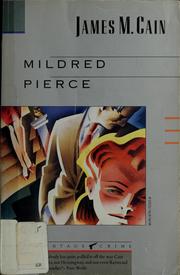
Mildred Pierce by James M. Cain

Summary:
Mildred Pierce had gorgeous legs, a way with a skillet, and a bone-deep core of toughness. She used those attributes to survive a divorce and poverty and to claw her way out of the lower middle class. But Mildred also had two weaknesses: a yen for shiftless men, and an unreasoning devotion to a monstrous daughter. Out of these elements, James M. Cain created a novel of acute social observation and devastating emotional violence, with a heroine whose ambitions and sufferings are never less than recognizable.

My take: 3 looks
First of all, if you have seen the movie, you have NOT experienced the book. Among other things, the book is a straight character study, and the movie is more action packed. Characters are removed and downplayed, and Veda is not quite the viper that she is in the book. But, most importantly, Monte does not die in the novel, and Veda never goes to jail. That portion of the story was invented by the filmmakers because the censorship code of the time required that evildoers be punished for their misdeeds. HBO recently redid the story, starring Kate Winslet, and it is said to be much truer to the novel.

With that being said, this was a doozy of a book. Mildred is a complex character. She doesn't take much off of her husband Bert, divorcing him quite early in the story, but will go back time and again to lesser men who care for nothing but a piece of her tail and some of her money. Yet she opens herself repeatedly to her eldest daughter Veda after numerous heinous verbal attacks. It is quite clear that Veda despises her mother through and through, evident to Mildred, but that makes Mildred only try harder to meet her expectations.

Veda is a viper of a daughter. She reminded me very much of Sarah Jane, a character in Imitation of Life. The difference is that Sarah Jane had some redemption at the end, although it was too late. Veda is a viper all the way through. She has firm respect for the one person who insults her to the core by letting her know that she has no talent at the piano. Everyone is furious with this man, but Veda inwardly admires him.

A very interesting character study, to be sure. But I have to wonder: what kind of characters are these? What is Cain trying to get across? That Mildred could survive, thrive and reinvent herself during and after the depression and Prohibition, only to crumble at the hands of her daughter? That mothers are gluttons for punishment? Did Ray stand for wholesomeness, which was crushed; while Veda stood for evil, which prospered?

And the men in their lives. Bert, who Mildred tossed away in favor of Wally, and later Monty, was the one stalwart  presence in her life, and she continued to go to him when she really needed advice. She had no respect for him, and yet he was the only one she respected.

I will ruminate on this one for months, I am sure. It was a very interesting book, and one that I recommend. If you read it, give me a call. We'll discuss it!

Friday, April 25, 2014

Oranges Are Not the Only Fruit by Jeanette Winterson

Summary:
Winner of the Whitbread Prize for best first fiction, Oranges Are Not the Only Fruit is a coming-out novel from Winterson, the acclaimed author of The Passion and Sexing the Cherry. The narrator, Jeanette, cuts her teeth on the knowledge that she is one of God’s elect, but as this budding evangelical comes of age, and comes to terms with her preference for her own sex, the peculiar balance of her God-fearing household crumbles.

My take: 4 looks
Honestly, I am not sure what I think of this book. There is a lot going on. I will just start a stream-of-consciousness review...

This is a book about a Christian extremist mother, who emotionally dominates her husband, micromanages her adopted daughter and fawns over her pastor.

She is a real nut, and I have met her before. She is every fundamental-evangelical-puritan-type who abhors sin and is curiously drawn to and manipulated by it without being aware of its hold on her. She wants to support missionaries, but won't show common decency and love to her neighbors, singing hymns at the top of her lungs while they are "fornicating", in order to irritate them. She is all about church work, to the exclusion of her duties as a wife, mother, friend, etc. God is her excuse for almost everything.

On the other side of the coin, this book is about Jeanette, her adopted daughter. So entrenched is she in her mother's religious fervor that she alienates herself from classmates at the public school, which she is ordered by the court to attend. Her class projects all have religious subjects, and not always positive or loving references. This is a religion that thrives on fear.

However, something is happening to Jeanette...something that will forever mark her as full of demons and sinful.

It's no secret that this is a coming-of-age and coming-out novel about a young lesbian girl in a rigidly Christian household, and I have read that it is semi-autobiographical. To me, though, there is just too much going on. Coming out gay is tough enough, but couple that with a fanatical mother and it's almost too much to bear. I was not as much pulling for Jeanette as I was pulling for her mother's demise. I despised that woman.

Don't think this is a book about a gay woman. It's not. While her lesbian experiences were not closely examined, they were on the periphery, as well as interesting characters who helped Jeanette along the way. It's the relationship with her mother and her relationship with her faith that took center stage, and made for an intriguing story. The book is beautifully written, with wit and wisdom, expertly weaving Jeanette's magical alter-ego in and out of the prose. It is about being entrenched in a dogma and slowly finding out that there are other views and perspectives that deserve attention. It is about being crafted into one person and slowing breaking out of that shell to be who you truly are. It is about eating oranges all your life, and awaking your taste buds as you finally try other fruit.

Recommended.

Sunday, April 13, 2014

The Chosen by Chaim Potok

Summary:
A classic story of two fathers and two sons and the pressures on all of them to pursue the religion they share in the way that is best suited to each. And as the boys grow into young men, they discover in the other a lost spiritual brother, and a link to an unexplored world that neither had ever considered before. In effect, they exchange places, and find the peace that neither will ever retreat from again....

My take: 3 stars
A book about two boys becoming young men, their fathers and how they relate to them, and growing up under the same, but vastly different, religion.

This book is full of symbolism, from the baseball game which begins the book, to the eye issues experienced by both young men, to the emerging of a new nation, and hence, two new young men.

However, maybe a little too much symbolism. It is heavy-laden and prime for themes, studies and analyses. On the surface, it is an intricate story of interwoven lives and faiths. In discussion, it becomes The Mariana Trench. My college-age son reports to me that, regardless of the assignment in Literature classes, he always uses this book for his theme.

I think the most important role of this book, written in 1967, is not the relationships presented, but the religions. In a time when Judaism was not widely experienced or understood in America, very little was pervasively known about Orthodoxy versus Hasidism. Potok describes each in detail and from the inside out. History is revealed, and the ideologies of the two sects are described, as well as lived out by the characters, making the understanding of them almost palatable.

The birth of the nation of Israel is overshadowed by the personal stories, but acts all the same as a climax to the novel as it sets the stage for an exciting and dangerous future for Jewry worldwide.

I think less should be spoken of about the symbolism of the book and more about the trailblazer that Potok becomes in bringing two sides of a very foreign and ancient religion to the American masses. I learned more about the history, beliefs and ideals of Judaism from this book than ever before.

Highly recommended.

Monday, April 7, 2014

Unbroken by Laura Hillenbrand

Summary:
On a May afternoon in 1943, an Army Air Forces Bomber crashed into the Pacific Ocean and disappeared, leaving only a spray of debris and a slick of oil, gasoline, and blood.  Then, on the ocean surface, a face appeared.  It was that of a young lieutenant, the plane’s bombardier, who was struggling to a life raft and pulling himself aboard.  So began one of the most extraordinary odysseys of the Second World War. The lieutenant’s name was Louis Zamperini.  In boyhood, he’d been a cunning and incorrigible delinquent, breaking into houses, brawling, and fleeing his home to ride the rails.  As a teenager, he had channeled his defiance into running, discovering a prodigious talent that had carried him to the Berlin Olympics and within sight of the four-minute mile.  But when war had come, the athlete had become an airman, embarking on a journey that led to his doomed flight, a tiny raft, and a drift into the unknown. Ahead of Zamperini lay thousands of miles of open ocean, leaping sharks, a foundering raft, thirst and starvation, enemy aircraft, and, beyond, a trial even greater.  Driven to the limits of endurance, Zamperini would answer desperation with ingenuity; suffering with hope, resolve, and humor; brutality with rebellion.  His fate, whether triumph or tragedy, would be suspended on the fraying wire of his will.

My take: 4 looks
This one gets four looks because it is a true story, the man survives, and he is a hero. However, Hillenbrand would be best served with a harsher editor. While the story is unbelievable riveting, the text is redundant, verbose and, many times, unnecessary.

For example, the fact that these young soldiers were immature and unseasoned is repeated again and again in copious stories of draining CO2 from life jackets to make soda, taking a dare to fly into a storm, and ignoring sage advice of superiors. We get it. They were young and cocky. Strike a few pages here and there and get on with the meat of the story. If felt at times that Hillenbrand may get paid for the word.

If you don't mind skimming, this is an excellent story of the human spirit and one man's desire to live despite the odds.

Recommended.

Tuesday, January 14, 2014

Lillian Hellman and The Children's Hour

Lillian Florence "Lilly" Hellman (June 20, 1905 – June 30, 1984) was an American author of plays, screenplays, and memoirs and throughout her life, was linked with many left-wing political causes.

I am sitting on the sofa, updating my reading blog and watching one of my favorite movies, "The Children's Hour". The movie is made from one of Hellman's plays written 1934.

The first sentence above indicates that she was very left-wing. The subject of the movie that I am watching is about a children's school which is ruined because one of the young, trouble making students lies about the female teachers engaging in a lesbian relationship.

The movie was made in 1962, when a lesbian relationship was still illegal in most, if not all, of the United States. However, the amazing thing is that the play was written in 1934. Unbelievable!


A half-length portrait of two women, dran in black on a pink background. One woman stands in front, looking to the side. The other woman stands behind her, with her hands placed on the arms of the woman in front. SHe is slightly taller than the woman in front and looks down at her face from behind. Next to the face of the woman in front reads, in white letters, "DIFFERENT...". Below the picture reads "AUDREY HEPBURN, SHIRLEY MACLAINE, JAMES GARNER". Beneath these names reads "THE CHILDREN'S HOUR", with a small sketch of a man next to the title. In a white border to the poster reads the name "WILLIAM WYLER".No wonder Hellman was tagged as a liberal. Who on earth would write about such things when they were still so taboo?

In 1944, Charles R. Jackson wrote a book called, "The Lost Weekend" which contains strong homosexual undertones. However, this is ten years after Hellman's play.

The production of the play of "The Children's Hour" is just as riveting (from Wikipedia, which is never wrong):

This was Hellman's first hit play. At the time, any mention of homosexuality on stage was illegal in New York State, but the play was such a success and so widely praised by critics that the subject matter was overlooked.

After the play was banned in Boston, Chicago, and London, it opened in Paris, retitled Les Innocents (The Innocents), to popular review.

In 1936, the play was made into a film directed by William Wyler. However, because of the Production Code, the story was adapted into a heterosexual love triangle, the controversial name of the play was changed, and the movie was eventually released as These Three. Hellman reportedly worked on the screenplay, virtually all of the play's original dialogue was kept, and she was satisfied with the result, saying the play's central theme of gossip was unaffected by the changes.

In 1952, a revival and revised stage production was also construed as an implied criticism of the House Un-American Activities Committee.

In 1961, the play was adapted, with its lesbian theme intact, for the film The Children's Hour, also directed by Wyler.

That alone with worth a watch of this classic.