Showing posts with label banned book. Show all posts

Friday, August 11, 2017

The book was better.


I'm sure you have seen this illustration before on movie-versus-book discussions. With the sudden influx of movies based on books, I feel that I have to stress again how much richer and more satisfying reading a book is over seeing the movie adaptation.

When you read, you are creating your own movie. Your brain is more engaged and invested in a book. It is a very active process, combining the words you are seeing, processing, and understanding to create a full-color, vivid, on-demand movie in your mind. You are director and producer. You are in charge of makeup and costumes. You choose the locations and scenes. All of this in a split second.

That's why reading makes you smarter. Not only are you able to learn new words, but you are also engaging so much of your brain in sequential, systematic, and parallel ways - many times all at once!

There will never be a better movie-maker than your own imagination.

Some books to try instead of the movie:

The Handmaid's Tale by Margaret Atwood
One of my top 10 books, the story presents a challenge to the screen because it is primarily internal monologue. While the film and television series are true to the dystopian nature of the story, it is impossible to capture the parallel thoughts and feelings of the protagonist and the other handmaids as told in the double narrative-style of the book.

The Giver by Lois Lowry
Another one of my faves, this is the first book in a quartet. While the film adaptation, again, presents the general idea of the book, the fact that one character was given a much bigger part in the film (Streep's characterization of the Chief Elder) in order cash in on her star power doesn't sit well with me. The book is about exploring feelings, making decisions, and actions bringing consequences.

The Lost Weekend by Charles R. Jackson
The film version was highly acclaimed, nominated for seven Academy Awards and winning four. What is missing here, however, is the raw and visceral pull of alcohol on the main character. It consumes him, drives his behavior, and pulls the reader in opposing directions of disgust and sympathy for him. Thought of as the seminal American novel on addiction, this desperation cannot be captured on film. That, coupled with homosexual overtones, makes this 1944 novel a must-read.

These are just three of my pics for you. Let me know of other books-into-films you have experienced, and what your impression on the comparison was.

Tuesday, September 27, 2016

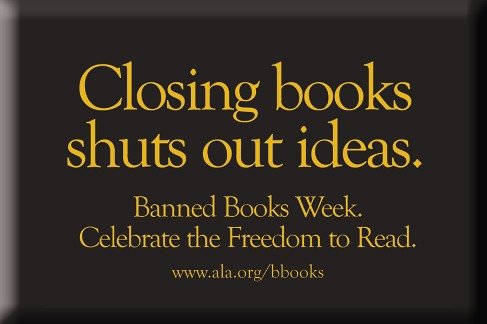
Banned Books Week: Entirely New List

I just realized that the top challenged books in 2015 contains no duplicates from the list last year. That amazes me! I have read only two of the 2014 list. I need to get busy!!
 
Top Ten Challenged Books Lists by Year: 2014
 
1)      The Absolutely True Diary of a Part-Time Indian, by Sherman Alexie
Reasons: anti-family, cultural insensitivity, drugs/alcohol/smoking, gambling, offensive language, sex education, sexually explicit, unsuited for age group, violence. Additional reasons: “depictions of bullying”
 
2)      Persepolis, by Marjane Satrapi
Reasons: gambling, offensive language, political viewpoint. Additional reasons: “politically, racially, and socially offensive,” “graphic depictions”
 
3)      And Tango Makes Three, Justin Richardson and Peter Parnell
Reasons: Anti-family, homosexuality, political viewpoint, religious viewpoint, unsuited for age group. Additional reasons: “promotes the homosexual agenda”
 
4)      The Bluest Eye, by Toni Morrison
Reasons: Sexually explicit, unsuited for age group. Additional reasons: “contains controversial issues”
 
5)      It’s Perfectly Normal, by Robie Harris
Reasons: Nudity, sex education, sexually explicit, unsuited to age group. Additional reasons: “alleges it child pornography”
 
6)      Saga, by Brian Vaughan and Fiona Staples
Reasons: Anti-Family, nudity, offensive language, sexually explicit, and unsuited for age group. Additional reasons:
 
7)      The Kite Runner, by Khaled Hosseini
Reasons: Offensive language, unsuited to age group, violence
 
8)      The Perks of Being a Wallflower, by Stephen Chbosky
Reasons: drugs/alcohol/smoking, homosexuality, offensive language, sexually explicit, unsuited for age group. Additional reasons: “date rape and masturbation”
 
9)      A Stolen Life, Jaycee Dugard
Reasons: drugs/alcohol/smoking, offensive language, sexually explicit, and unsuited for age group
 
10)  Drama, by Raina Telgemeier
Reasons: sexually explicit

Monday, September 26, 2016

Banned Books Week, Y'all!!


Well, Captain Underpants didn't make the list this year, but there are quite a few LGBT on this time. I don't know if that's good because it means that there is more diversity in today's books, or if it's bad because they are being challenged. I am going to stick with it's a good thing!

I have read three of the following. Let me know how many you have read!

The top ten most frequently challenged books of 2015 are:

  1. Looking for Alaska, by John Green
    Reasons: Offensive language, sexually explicit, and unsuited for age group.
  2. Fifty Shades of Grey, by E. L. James
    Reasons: Sexually explicit, unsuited to age group, and other (“poorly written,” “concerns that a group of teenagers will want to try it”).
  3. I Am Jazz, by Jessica Herthel and Jazz Jennings
    Reasons: Inaccurate, homosexuality, sex education, religious viewpoint, and unsuited for age group.
  4. Beyond Magenta: Transgender Teens Speak Out, by Susan Kuklin
    Reasons: Anti-family, offensive language, homosexuality, sex education, political viewpoint, religious viewpoint, unsuited for age group, and other (“wants to remove from collection to ward off complaints”).
  5. The Curious Incident of the Dog in the Night-Time, by Mark Haddon
    Reasons: Offensive language, religious viewpoint, unsuited for age group, and other (“profanity and atheism”).
  6. The Holy Bible
    Reasons: Religious viewpoint.
  7. Fun Home, by Alison Bechdel
    Reasons: Violence and other (“graphic images”).
  8. Habibi, by Craig Thompson
    Reasons: Nudity, sexually explicit, and unsuited for age group.
  9. Nasreen’s Secret School: A True Story from Afghanistan, by Jeanette Winter
    Reasons: Religious viewpoint, unsuited to age group, and violence.
  10. Two Boys Kissing, by David Levithan
    Reasons: Homosexuality and other (“condones public displays of affection”).

Friday, October 2, 2015

Banned Books Week: Yes, it's still happening

Ruth Graham wrote a column in Slate magazine titled "Banned Books Week is a Crock", with the subtitle, "That’s good news! No one bans books anymore. We won!"

Unfortunately, this kind of ignorant statement can be expected from a columnist who intimated in 2014 that adults should feel embarrassed if they read books written for young adults or children. I can only come to the conclusion that Slate keeps her on their list of writers to troll readers. After all, controversy many times increases readership.

And therein lies the sweet irony. When a book is challenged, even if it is not ultimately pulled from the shelves, a firestorm of activity ensues, with the publisher and author usually coming out victorious.


Author Ted Dawe with a copy of his banned book Into the River. www.stuff.co.nz
Case in point: New Zealand's Office of Film and Literature Classification (where the head is called the Chief Censor) placed an "interim restriction" on Ted Dawe's YA book "Into the River".

Interim Restriction = BANNED. You can get details on it here and here,

Dawe himself supports the "Streisand effect" in this statement: The censorship of my award-winning young adult novel, Into The River, made me a minor literary celebrity. All I wanted was to get working-class boys to read.

You see, while books may only be challenged in the United States, they are, indeed, still banned around the world, and in places that may be surprising (like New Zealand). Banned Books Week is not about bringing life to a dead topic. It is about maintaining a spotlight on what Americans hold dear, and people everywhere should be able to enjoy: FREEDOM.

I am going now to get my copy of Dawe's book!

Thursday, October 1, 2015

Banned Books Week: Why does it matter?

Why should you be interested it keeping ALL books on the shelves?

A Book Challenge: Why Banned Books Week MattersBecause we need to protect the freedom to read whatever we want; and, that includes explicit, suggestive, disgusting, violent, and everything else under the sun of which writing consists. You are not endorsing the books. You are endorsing the freedom of choice.

For example, I will more than likely never read 50 Shades of Grey by E. L. James. Not because it's erotica; not because it's subject matter is S&M. I will probably never read it because I have read so many reviews that state it is just plain bad writing. I don't have time for that. Otherwise, I probably would have read the first one, just to see what all the hype was about. That's the same reason I read Twilight by Stephenie Meyers and The Hunger Games by Suzanne Collins. However, they didn't interest me, and I didn't read any further in their respective series.

Here are a few others that I remember, off the top of my head:
  • Naked Lunch by William S. Burroughs - It took weeks for disturbing images to leave me.
  • Guts by Chuck Palahniuk - I am still disgusted whenever I think of it.
  • Squirrel Seeks Chipmunk by David Sedaris - One objectionable story left me crossing this author off any further reading.
  • The Last Werewolf by Glen Duncan - How many ways can you describe anal sex, anyway?
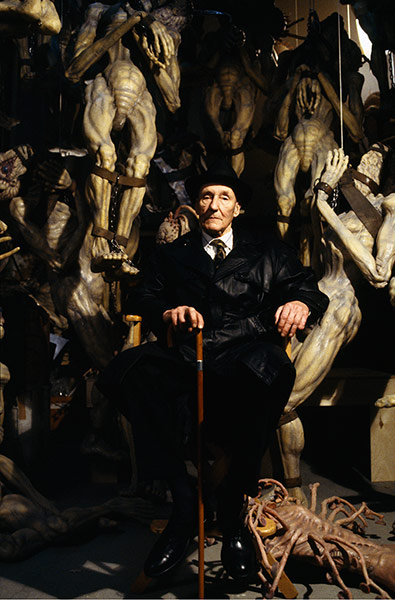
The author on the movie set of Naked Lunch.
Here's the thing: My list may make you go out and explore some of these titles. And you should! To read is to think. To think is to consider. To consider is to grow. I am not a bad person because I read those books. I am not damaged emotionally, and my intellect grew a bit with each one. Would I undo reading them? Not for a moment.

I kept my son from reading In Cold Blood by Truman Capote in 8th grade. I didn't think he was ready for the violence, and nuanced relationships discussed in the pages. However, now that he is older, I would encourage him wholeheartedly to read it, and would love to discuss it with him.

Additionally, I didn't request that it be removed from the 8th grade suggested reading list. That was not up to me. That is a line that does not and cannot be allowed to be crossed in this country.

Individual freedom of choice. If you want to read what someone else would consider objectionable, that should be up to you.

Remember, it's ultimately NOT about books, but about FREEDOM.

Wednesday, September 30, 2015

Banned Books Week's Wednesday Word: Smut

Smut
noun \ˈsmət\
obscene language or matter

Most books are challenged because someone finds something offensive about the story, language, or characters. Much of the time, it's considered obscene. In the old days, we called that "smut".

Listen to what Tom Lehrer thinks about banning smut, in all forms:


This was filmed in 1967, so there has been a faction of people speaking on behalf of intellectual freedom for decades. Lehrer uses the word "pornography", the definition of which we have honed a bit in modern usage. In 1967, it was anything that may "arouse the prurient interests of the average person." Today, it means more alone the lines of  anything that serves to "show or describe naked people or sex in a very open and direct way in order to cause sexual excitement". So, we have upped it a notch in modern times.

2014 Books challenged because of "smut":
  1. The Absolutely True Diary of a Part-Time Indian, by Sherman Alexie
  2. Persepolis, by Marjane Satrapi
  3. And Tango Makes Three, Justin Richardson and Peter Parnell
  4. The Bluest Eye, by Toni Morrison
  5. It’s Perfectly Normal, by Robie Harris
  6. Saga, by Brian Vaughan and Fiona Staples
  7. The Kite Runner, by Khaled Hosseini
  8. The Perks of Being a Wallflower, by Stephen Chbosky
  9. A Stolen Life, Jaycee Dugard
  10. Drama, by Raina Telgemeier

Yes, that makes the entire top 10 list of 2014 Challenged Books, done so with SMUT being one of the chief reasons.

Your word for this day of Banned Books Week: SMUT!

Tuesday, September 29, 2015

Banned Books Week: This will make you laugh


The most challenged book of 2014 was a mere third in 2013. What was the most challenged book that year? I'm glad you asked!

Captain Underpants (series), by Dav Pilkey
Reasons: Offensive language, unsuited for age group, violence

No, I am not somehow mistaken. As a matter of fact, this was the most challenged book for two consecutive years, 2012 & 2013.

In 2013 alone, there were 307 attempts to remove or restrict books from school curricula and libraries. And that's just the reported challenges. The ALA estimates that there are 5 actual challenges for every one made formal. And in 2012, Captain Underpants beat out 50 Shades of Grey! Go figure...

The author's response is wonderful:


LOVE this response! Do me a favor, and buy the first book in the series of Captain Underpants, just to add to your collection!

Monday, September 28, 2015

Banned Books Week: The Most Challenged Book of 2014


The Absolutely True Diary of a Part-Time Indian, by Sherman Alexie

Reasons: anti-family, cultural insensitivity, drugs/alcohol/smoking, gambling, offensive language, sex education, sexually explicit, unsuited for age group, violence. Additional reasons: “depictions of bullying”.

Written in 2007, this is a coming-of-age story of a Native American teen. Although it is fiction, it draws on the author's experiences as a Native American with ancestry of several tribes, growing up on the Spokane Indian Reservation.

Challenged and removed from required reading as recently as 2014, it is an unapologetic look at the harsh side of how many  teens in this nation, and especially in Native American Reservations, are raised.

In 2010, the Arizona State House of Representatives actually passed a bill which outlines HOW to censor:

A SCHOOL DISTRICT OR CHARTER SCHOOL IN THIS STATE SHALL NOT INCLUDE IN ITS PROGRAM OF INSTRUCTION ANY COURSES OR CLASSES THAT INCLUDE ANY OF THE FOLLOWING:
 
1. PROMOTE THE OVERTHROW OF THE UNITED STATES GOVERNMENT.
2. PROMOTE RESENTMENT TOWARD A RACE OR CLASS OF PEOPLE.
3. ARE DESIGNED PRIMARILY FOR PUPILS OF A PARTICULAR ETHNIC GROUP.
4. ADVOCATE ETHNIC SOLIDARITY INSTEAD OF THE TREATMENT OF PUPILS AS INDIVIDUALS.

Unbelievable. The entire state of Arizona doesn't want an entire collection of books taught in school. There is no reading, discussion, teaching, exchange of ideas, or freedom to read inside these schools.

In the United States of America.

Sunday, September 27, 2015

It's BANNED BOOKS WEEK!!!


Time to exercise your reading freedom, bibliophiles!

September 27 - October 2 is Banned Books Week

What will YOU read?

Saturday, September 27, 2014

...and 2014 Banned Books Week comes to an end...

The last thought on banned books week is this: don't celebrate the books that are challenged. This is not about the books, the authors, those who challenge, or the issues. It's about freedom. It's about the freedom to read whatever you want to read, whenever you want to read it.

Have you heard the saying, "The more you read, the more you know"? It's true. Some banned books are not worth my time. They were published simply to be shocking, and that's not what I'm about.

However, the majority of challenged and banned books deal with difficult or taboo themes, and they need to be read to give perspective, the open eyes and to lift the veil of ignorance that we are under. Others give a raw and unflinching look at our past. That, too, is important to remember. To remember the mistakes of our past gives us a greater possibility that those mistakes won't happen again. We all need to look life square in the face.

Read. That is the most important thing. Read.

Friday, September 26, 2014

Jeff Bridges reads "The Giver", a highly challenged book


Jeff Bridges participates in Banned Books Week Virtual ReadOut!

Since its release in 1993, The Giver has been one of the most controversial books in American schools. Between 1990 and 1999, The Giver ranked 11th on the list of the books most frequently requested for removal. In the 2000s it was 23rd, just two spots below To Kill a Mockingbird.

Barbara Jones is the director of the Office for Intellectual Freedom (OIF), which maintains a database of attempts to remove books from schools. There is no way of knowing the exact number of actual attempts, as the OIF can only track those reported in the media or submitted to them by individuals, but since 1990 they have recorded over 11,000 separate instances of what they call “challenges,” “attempt[s] to remove or restrict materials.”

For The Giver just under one-third of all challenges (for which the outcome was reported) resulted in a removal. The state that has seen the most attempts to remove The Giver is Texas, but the book has also been challenged in Massachusetts, Washington, and many other states all over the country.

In the last two decades, the most frequent reasons for a book being challenged in the United States have been categorized by the OIF as complaints that the book contains “Offensive Language” or is “Sexually Explicit.” But The Giver is not usually objected to for either of these reasons. The most frequently cited reasons to challenge The Giver have been “Violence” and claims that the book is “Unsuited to [the] Age Group”—or in other words that it’s too dark for children.
                         
The chart below plots the top five most common reasons The Giver was challenged in red. The bars in blue represent how often that excuse was given for all book challenges the OIF has recorded.
thegiverchart01
But even if a few protective parents get their way in some districts, and the book is removed from a handful of libraries, it’s unlikely to stop the vast majority of young readers from finding it. The Giver has seen a surge in book sales ahead of the movie’s release, and on Amazon’s list of best-selling Teen & Young Adult Books, it currently ranks No. 2.

Thursday, September 25, 2014

The Best Banned Books on Film

Thanks to Word & Film for the article:

Ah, Banned Books Week. It's that week in Autumn that is welcomed into the open arms of readers everywhere, readers who cherish this celebration of freedom of speech -- and freedom of the written word. Herewith, ten more great movie adaptations of banned books.

"Animal Farm" (1954)
The publication of George Orwell's 1945 novel, Animal Farm, came at a time when Stalin was at the height of his reign in the Soviet Union. Orwell, clearly not a fan of Stalin's leadership philosophy, had a difficult time finding a publisher for his book, whose content was divisive and transparent in its satirical criticism of Stalin. Finally (and luckily) it found a home with Secker and Warburg Publishers. Since publication, Animal Farm has been banned in the USSR, the United Arab Emirates, Cuba, and North Korea. Though adapted multiple times, the one to watch (after you read the book) is the 1954 animated version by Joy Batchelor. Though it deviated from the source material, it's an interesting and entertaining addition to the world of book-to-film adaptations.


"The Da Vinci Code" (2006)The Da Vinci Code, the best-selling 2003 novel by Dan Brown, introduced us to Robert Langdon and the idea that there is so much more than meets the eye in the world of Christianity. The novel struck the Catholic Church as offensive and the powers-that-be in Lebanon went so far as to ban it in the country. Its publication inspired controversy among critics, historians, and theologians. Ron Howard directed the 2006 movie adaptation starring Tom Hanks and Audrey Tatou. Critics were as divided about the film but, ultimately, no matter where you stand on its content, at its core it's a nail-biter of an adventure.

"Gone with the Wind" (1939)
It didn't take long for Margaret Mitchell's 1936 Pulitzer- and National Book Award-winning novel, Gone with the Wind, to get snatched up by Hollywood. The epic tale was brought to the big screen by David O. Selznick and Victor Fleming. Its production was massive and often troubled, but following its release in 1939, the story, script, and star power (Clark Gable! Vivien Leigh!) earned it ten Academy Award wins. The book has been challenged on and off over the years because of its realistic depictions of slavery and race issues.

"Easy A" (Inspired by The Scarlet Letter) (2010)In 2010, screenwriter Bert V. Royal teamed up with director Will Gluck to bring a (very loose) adaptation of Nathaniel Hawthorne's 1850 novel, The Scarlet Letter, to the big screen. Together, they created a film that would join "Clueless" and "10 Things I Hate About You" in the Best Classic to Teen Dramedy Club (and would, simultaneously, launch the career of Emma Stone). The themes in Hawthorne's novel -- illegitimacy, adultery -- were quite risque for his time and led to its being challenged many times over the years.

"To Kill a Mockingbird" (1962)
Harper Lee's now-classic 1960 novel, To Kill a Mockingbird, takes place in the early 1930s in Alabama. Atticus Finch, respected attorney and father to Scout and Jem, takes on the defense of a black man named Tom Robinson. Tom has been accused of raping a white woman -- and by defending him, Atticus is opening himself up to the scorn and threats of the locals in the predominantly racist Southern town. In spite of many efforts across the world to ban Harper Lee's Pulitzer Prize-winning novel, most recently in 2013, it has sold more than thirty million copies. The 1962 movie adaptation, starring Gregory Peck, Brock Peters, and Robert Duvall, won three Academy Awards and was nominated for an additional five.

"One Flew Over the Cuckoo's Nest" (1975)
In 1962, Ken Kesey published the novel One Flew Over the Cuckoo's Nest, set in a psychiatric hospital in Oregon. Told from the perspective of Chief Bromdem, a Native American man assumed to be deaf and mute, his observations of and insights into the worlds of his fellow patients are thoughtful. They most often focus on Randle Patrick McMurphy, a man who feigned insanity in order to serve a jail sentence in the psych ward rather than prison. The book has been challenged and banned multiple times across the country, and has been called "pornographic" and "garbage." Milos Forman brought the book to screen in 1975 with an adaptation starring Jack Nicholson, Will Sampson, and Louise Fletcher. It won five Academy Awards including Best Picture, Best Director, Best Lead Actress, and Best Lead Actor.

"Where the Wild Things Are" (2009)
Spike Jonze's 2009 adaptation of the Maurice Sendak classic Where the Wild Things Are had the perfect source material, the perfect Max (played by Max Roberts Records), and the perfect screenwriter (Dave Eggers). (And in this writer's opinion, the perfect music.) However, in spite of its beautiful visuals and the aforementioned perfect pieces, the film didn't fare particularly well in theaters or with the critics. The book has been challenged over the years because of its dark subject matter -- though still remains a perennial favorite of so many parents.

"Of Mice and Men" (1939)
This writer's last viewing of a Steinbeck adaptation took place in the theater earlier this year, with James Franco as George and Chris O'Dowd as Lennie. This is only the latest adaptation, though. The show on stage has since closed, and our recommendation is that you skip the Gary Sinise-helmed version from 1992 (starring Sinise as George and John Malkovich as Lennie) and reach further back to Lewis Milestone's Oscar-nominated 1939 adaptation. The book has been challenged over the years because of its accurate depiction of slavery in the United States.

"Sophie's Choice" (1982)
William Styron's 1979 novel, Sophie's Choice, is the story of three people sharing space in a Brooklyn boarding house in 1947. One of these three, Sophie, has survived the concentration camps that too often peppered the landscape of World War II and carries with her the guilt from a decision she made at that time. The novel has been challenged often, as recently as 2001, because of the explicit sexual content. This last attempt at banning, however, found students rightfully fighting back. In 1982 director Alan J. Pakula adapted Styron's novel for film, starring Meryl Streep, who earned her second of three lifetime Oscars (thus far) for her performance.

"The Lord of the Rings" (2001)
J.R.R. Tolkien's 1954 fantasy novel, The Lord of the Rings, which began an epic trilogy, has been adapted in numerous iterations since its publication. When Peter Jackson decided to direct a brand-new trilogy beginning in 2001, however, all previous iterations fell to the background as Jackson's creative brilliance brought new life to the story while respecting Tolkien's source material. The trilogy over the years has been challenged on grounds of being "irreligious." Regardless, the first in the series is, to date, one of the best-selling novels of all time.

Wednesday, September 24, 2014

Why Celebrate Banned Books Week?

Why "celebrate" Banned Books Week? After all, some of these books I don't even want to read. I am totally and completely uninterested in "50 Shades of Grey" by E. L. James. Why am I uninterested? Because it's full of sex? Because it deals with what I consider sexually deviant behavior, including bondage, and S&M? No. I am not interested in reading it because I have read too many reviews that states it's not good writing. I don't have time to read bad writing, regardless of the subject.

What if you want to read it? More power to you!
 
No, we are not celebrating the books themselves, but the FREEDOM TO CHOOSE the books you want to read. When you start removing choices because even one person finds something offensive, you start to limit the ability for a person to choose for themselves ... think for themselves ... decide for themselves.
I am all for censorship: self-censorship ... parental censorship. That's what I've done with "50 shades" for myself, and what I did with "In Cold Blood" for my son. However, I am NOT for telling anyone else what they can and can't read. That is crossing a line that we don't need to cross in this country of freedom. 
 
So, today, celebrate Banned Books Week by reading WHAT you want to read, WHEN you want to read, WHERE you want to read. Celebrate the freedom to read, learn, explore and experience through the written word.

Tuesday, September 23, 2014

Banned Books Timeline Video

The American Library Association has come up with a very cool timeline of book liberation:

30 years of challenged books

I was surprised at the books that people found offensive, and the reasons they gave.

When Strat was in 8th grade, one of the books on his reading list was "In Cold Blood" by Truman Capote. I contacted the teacher because I didn't think Strat was ready for that book. Its depiction of the murder of an entire family was shocking, but I also felt the portrayal of the murderers in a humanistic and sympathetic manner was too advanced for him. So, Strat didn't read it.

However, he can certainly read it now, and analyze the emotions, feelings, and friendships in the book with a more mature mindset than 6 years ago. He can ponder how a person can kill innocent people, then evoke sympathy as he awaits his death. it is a very complex book.

I exercised my right as a parent to remove this book from Strat's reading list. I did not ever consider asking the teacher to remove it from the class reading list. It never crossed my mind to request that it be removed from the Middle School Library. The very idea that someone would feel they were in the right to remove it in such a sweeping manner boggles my mind.

And yet ... it still happens.

Monday, September 22, 2014

Judith Krug - Banned Book Advocate

Judith Krug (from Wikipedia) was an American librarian, supporter of freedom of speech, and prominent critic of censorship. Krug became Director of the Office for Intellectual Freedom at the American Library Association in 1967. In 1969, she joined the Freedom to Read Foundation as its Executive Director. Krug co-founded Banned Books Week in 1982.

She coordinated the effort against the Communications Decency Act of 1996, which was the first attempt by the United States Congress to introduce a form of censorship of speech on the Internet. Krug strongly opposed the notion that libraries should censor the material that they provide to patrons. She supported laws and policies protecting the confidentiality of library use records. When the United States Department of Justice used the authority of the USA PATRIOT Act of 2001 to conduct searches of what once were confidential library databases, Krug raised a public outcry against this activity by the government.

In 2003, she was the leader of the initiative to challenge the constitutionality of the Children's Internet Protection Act. Her efforts led to a partial victory for anti-censorship campaigners; the Supreme Court of the United States ruled that the law was constitutional, but that filtering software on computers in public libraries could be turned off if so requested by an adult guardian. Krug warned that the filters used to censor Internet pornography from children were not perfect and risked blocking educational information about social matters, sexuality, and healthcare.

Before her death in 2009, you can see that she worked tirelessly with one goal: to let people decide for themselves. That is the most powerful form of democracy.

Thank you, Judith Krug!


Sunday, September 21, 2014

Introducing ... Banned Books Week 2014


Welcome to another Banned Books Week! Here are the most challenged books of last year:

Out of 307 challenges as reported by the Office for Intellectual Freedom
  1. Captain Underpants (series), by Dav Pilkey
    Reasons: Offensive language, unsuited for age group, violence
  2. The Bluest Eye, by Toni Morrison
    Reasons: Offensive language, sexually explicit, unsuited to age group, violence
  3. The Absolutely True Diary of a Part-Time Indian, by Sherman Alexie
    Reasons: Drugs/alcohol/smoking, offensive language, racism, sexually explicit, unsuited to age group
  4. Fifty Shades of Grey, by E.L. James
    Reasons
    : Nudity, offensive language, religious viewpoint, sexually explicit, unsuited to age group
  5. The Hunger Games, by Suzanne Collins
    Reasons: Religious viewpoint, unsuited to age group
  6. A Bad Boy Can Be Good for A Girl, by Tanya Lee Stone
    Reasons: Drugs/alcohol/smoking, nudity, offensive language, sexually explicit
  7. Looking for Alaska, by John Green
    Reasons: Drugs/alcohol/smoking, sexually explicit, unsuited to age group
  8. The Perks of Being a Wallflower, by Stephen Chbosky
    Reasons: drugs/alcohol/smoking, homosexuality, sexually explicit, unsuited to age group
  9. Bless Me Ultima, by Rudolfo Anaya
    Reasons: Occult/Satanism, offensive language, religious viewpoint, sexually explicit
  10. Bone (series), by Jeff Smith
    Reasons: Political viewpoint, racism, violence
Kudos to Captain Underpants for being at the top of the list yet again!

Saturday, September 20, 2014

Get ready for Banned Books Week!

Banned Books Week 2014 starts tomorrow.

Let's get ready for it:

What is the difference between a challenge or banning?
A challenge is an attempt to remove or restrict materials, based upon the objections of a person or group.  A banning is the removal of those materials.

Why are books challenged?
Books usually are challenged with the best intentions—to protect others, frequently children, from difficult ideas and information.

Often challenges are motivated by a desire to protect children from “inappropriate” sexual content or “offensive” language. The following were the top three reasons cited for challenging materials as reported to the Office of Intellectual Freedom:
  1. the material was considered to be "sexually explicit"
  2. the material contained "offensive language"
  3. the materials was "unsuited to any age group"
Who challenges books?
Throughout history, more and different kinds of people and groups of all persuasions than you might first suppose, who, for all sorts of reasons, have attempted—and continue to attempt—to suppress anything that conflicts with or anyone who disagrees with their own beliefs. According to the Challenges by Initiator, Institution, Type, and Year, parents challenge materials more often than any other group.

Where does the American Library Association stand on challenging and banning books?
ALA's basic policy concerning access to information states that, “Librarians and governing bodies should maintain that parents—and only parents—have the right and the responsibility to restrict the access of their children—and only their children—to library resources.” Censorship by librarians of constitutionally protected speech, whether for protection or for any other reason, violates the First Amendment.

Sunday, April 13, 2014

National Library Week! April 13-19, 2014


It is National Library Week in the good 'ole US of A!

I love libraries! I love everything about them: books, librarians, study spaces, comfy places to read, internet access, Friends of the Library stores, music, movies, foreign language offerings, classes, and it goes on and on.

I miss three things from libraries past: card catalogs, periodical index and microfiche. I know. Go figure.

Now THOSE were the days of research! You actually had to DO something, put forth more effort than typing a search term...but I digress...
 
This is all about LIBRARIES! Looking forward to this week:
  • Monday: Ancient Libraries
  • Tuesday: Types of Libraries
  • Wednesday: Melville Louis Kossuth Dewey
  • Thursday: Banned Books
  • Friday: Library Field Trip!
 
 
 (1851-12-10)

Thursday, January 3, 2013

The Handmaid's Tale by Margaret Atwood

Summary:
In the world of the near future, who will control women's bodies? Offred is a Handmaid in the Republic of Gilead. She may leave the home of the Commander and his wife once a day to walk to food markets in which signs are now pictures instead of words because women are no longer allowed to read. She must lie on her back once a month and pray that the Commander makes her pregnant because, in an age of declining births, Offred and the other Handmaids are only valued if their ovaries are viable. Offred can remember the days before: when she lived and made love with her husband Luke; when she played with and protected her daughter; when she had a job, money of her own, and access to knowledge. But all of that is gone now.... Funny, unexpected, horrifying, and altogether convincing, The Handmaid's Tale is at once scathing satire, dire warning, and tour de force.

My take: 4 looks
Dystopian society books are usually not my favorite, but this book was riveting. Set in what could be the very near future, society goes to a male-dominated theocracy quickly and with very little resistance.

It was shocking how complicit the masses are in this sudden and sweeping change to the fabric of society. Fear, combined with passivity and rationalization, form to make a straight path to a world which we fought from becoming at various times in our past. It is the typical "you may believe as you wish, as long as you believe as I do" mentality.

The writing here is superb, with Atwood commenting on the right, as well as the left. So much of her story smacks of today's organized religion and how far it has come from the ideals presented in the Bible. On the other hand, protesters are also caricatured. Not only are old feminist liberals taken to task, but those in subjugation are conflicted, too. Becoming fiercely demonstrative when given the opportunity to destroy a life, as theirs has also been destroyed, they do not hesitate tearing apart a human being with their bare hands, even as it makes some insane.

The commentary on the use of language, illiteracy, and lost of individuality in order for a small group to control the masses is sickeningly familiar. As opposed to other dystopian-centered books, this book has a possibility to it that is sobering.

Highly recommended.

Monday, July 16, 2012

On this date in 1951...


On this date in 1951, the Catcher in the Rye by J. D. Salinger was published.

The main character, Holden Caulfield, made earlier appearances in a few of Salinger's short stories, sold as many as ten years before this book.

It has held the distinction of being both the most censored and second most taught book in public schools. It is among the top ten most challenged books. A teacher was fired in 1960 for assigning it.

It is rife with teenage rebellion, expletives, drinking, implied homosexuality, smoking and sex.

While not really a coming-of-age novel, there is debate on whether Holden Caulfield matures at all throughout the story. Some believe he does not while others believe that he reaches a new level of self-awareness.

I read this book in college and remember very little of it. I remember that Holden was somewhat of a misanthrope, whiny punk. I was relatively unimpressed. I may read it again at some point, benefiting from my adult perspective. Perhaps I will see more than surface writing the second time around.