Thursday, May 29, 2014

Mudbound by Hillary Jordan

Summary:
In Jordan's prize-winning debut, prejudice takes many forms, both subtle and brutal. It is 1946, and city-bred Laura McAllan is trying to raise her children on her husband's Mississippi Delta farm—a place she finds foreign and frightening. In the midst of the family's struggles, two young men return from the war to work the land. Jamie McAllan, Laura's brother-in-law, is everything her husband is not—charming, handsome, and haunted by his memories of combat. Ronsel Jackson, eldest son of the black sharecroppers who live on the McAllan farm, has come home with the shine of a war hero. But no matter his bravery in defense of his country, he is still considered less than a man in the Jim Crow South.

It is the unlikely friendship of these brothers-in-arms that drives this powerful novel to its inexorable conclusion. The men and women of each family relate their versions of events and we are drawn into their lives as they become players in a tragedy on the grandest scale.

My take: 3 stars
Typical story of racism in the south after WWII. Black sharecroppers on the land of white owners. Some whites hate blacks and others simply follow the rules because they are the social mores of the day. That is the typical part of the story. The part that sets this book apart is the comparison and contrast of the characters.

The book is written from the perspectives of six characters, half white and half black: Two husbands, two wives, and two war veterans just returned home. The women are the richest and most complex.

Laura is a white wife, who is very submissive to her husband; however, he knows her moods: "A woman will make her feelings known one way or another. Laura's way is with music: singing when she's content, humming when she isn't, whistling tunelessly when she's thinking a thing over and deciding whether or sing or hum about it."

In contrast, Florence is the black wife of a man who tends the land that he doesn't own. She is a headstrong midwife and let's her husband know where she stands: "You'll move if I say so", Hap (her husband) said. "For the husband is the head of the wife, even as Christ is the head of the church." Florence's reply: "Only so long as he is alive. For if the husband be dead the wife is loosed from his law. Says so in Romans."

Henry and Hap are the husbands, one owns the land and the other works it. Jamie and Rosnel are both war veterans, and are dealing with their war-damaged psyches in different ways.

There is one character who overshadows all of these, however, and we never get to hear from him. It's Pappy, the cruel racist father of Henry and Jamie, who lives with Henry and family. While I detested Pappy, his ways and his words, Jordan draws a very real character from this time, and I wanted to hear from him. What made him so hateful? Was he always mean? Did something happen in his life to set his ways, and his path on one of hate-filled vitriol? Why didn't we hear from him? Why would Jordan choose to make one of the most pivotal characters silent? It was disappointing.

As was the last chapter, told by Rosnel. It was full of "what if" scenarios. I got the feeling that Jordan assumed the reader would want to know how Rosnel, out of all of the other characters, turned out. With me, this was not the case. Laura started the book, the book was really about her at its core, and I think Laura should have been the one to close it. To have Rosnel close it seemed needless and cast a hint of preference on the closing. It gave him an unnecessary spotlight at the end that marred the story.

Tuesday, May 27, 2014

Suzanne's Diary for Nicholas by James Patterson

Summary:
Katie Wilkinson's boyfriend Matt dumps her; not a total cad, he leaves her a gift, a diary kept by Suzanne, his first wife, for their son Nicholas. Though it's not exactly the diamond ring Katie was hoping for, she's unable to make herself destroy the diary-against her better judgment, Katie begins to read. Drawn against her will into the other woman's world, Katie learns of physician Suzanne's heart attack at age 35 and her decision to slow down, accomplished by a move to Martha's Vineyard and a new job as a simple country doctor. When love comes knocking, in the form of housepainter-cum-poet Matt Harrison, Suzanne is ready to listen to her newly repaired heart.

Though painful for Katie, she begins to know and like Suzanne and her infant son Nicholas. Suzanne's devotion to Matt and their son shines through, as well as her plainspoken wisdom. While the journal helps Katie understand Matt, whether they can write a future together remains in question.

My take: 2.5 looks
This is what I call a "palette cleanser": a book that is virtually mindless and requires no thought, but is entertaining nonetheless. Typical chick-lit, the characters are likable, the romance is unrealistic romantic, and the outcome is obvious. This is the perfect beach book, and I recommend it as such.

The Woman Who Knew Gandhi by Keith Heller

Summary:
Based on an aside in Mahatma Gandhi's autobiography, in which he mentions a brief but seductive youthful flirtation with an Englishwoman, The Woman Who Knew Gandhi boldly imagines a long correspondence between a spiritual leader from the East and an ordinary woman from the West.

In 1948, just after Gandhi's assassination, Martha Houghton receives a letter from Gandhi's son, who himself lies dying of tuberculosis in Bombay. Having found a stash of her letters to his father, he asks to meet her. The request sends Martha into a tailspin, for her husband knows nothing of her lifelong friendship with Gandhi. Martha and her husband are forced to reevaluate their long marriage, and she must find a way to reconcile the disparate halves of her life. Moreover, their small community becomes a magnet for the press, and Martha finds her words twisted and used against her. Ultimately, she must decide whether to meet her old son's friend on his deathbed, or to remain in England and mend the rift in her marriage.

My take: 4 looks
I love accounts like this! One of my favorite books, That Same Flower by Jostein Gaarder, builds on a relationship St. Augustine had before he renounced sensual love. While all of Heller's book is pure speculation, it is told in such a realistic way that the reader is immediately brought into the fantasy.

The book focuses less on Martha's time with Gandhi and more on how his assassination affects her, then the revelation to her husband of her years of friendship with this famous man of peace. Martha receives a letter from Gandhi's son and she is forced to confront what she has hidden for decades. This throws Martha and her husband into a state of reflection, her on the life she could have had; and him wondering how he could have lived this long with his wife and known nothing of his wife's friendship.

Once the news media gets wind of the relationship, they do what the media normally does, distorts the truth until it is unrecognizable. This affects Martha and her family, but that storyline is very secondary to the emotions that each character in the book feels. In the climax, Martha travels to India to confront Gandhi's son on his deathbed.

This book was extremely interesting and I would recommend it.

Monday, May 19, 2014

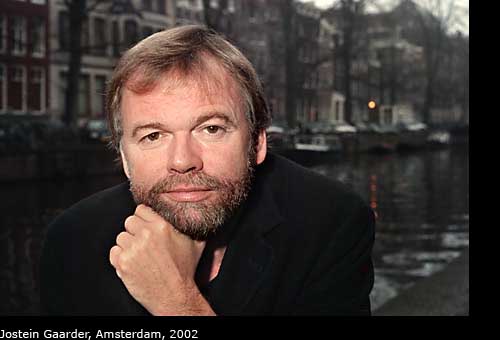
Author Spotlight: Jostein Gaarder


Jostein Gaarder is quite unlike other authors. From his GoodReads bio:

Jostein Gaarder is a Norwegian intellectual and author of several novels, short stories and children's books. Gaarder often writes from the perspective of children, exploring their sense of wonder about the world. He often uses metafiction in his works, writing stories within stories.

Gaarder was born into a pedagogical family. His best known work is the novel Sophie's World, subtitled A Novel about the History of Philosophy. This popular work has been translated into fifty-three languages; there are over thirty million copies in print, with three million copies sold in Germany alone.

In 1997, he established the Sophie Prize together with his wife Siri Dannevig. This prize is an international environment and development prize (USD 100,000 = 77,000 €), awarded annually. It is named after the novel.


Jostein Gaarder is, by far, my favorite author. When my husband asked me recently to name a book I would want if deserted on an island, I named Sophie's World, the first novel I read by Gaarder. Written from a child's point of view, as many of his works are, "Sophie" is a novel about the history of philosophy. Gaarder handles this very complex and intricate subject so deftly and through such a compelling story that the reader doesn't realize it meets most requirements for college-level Philosophy 101. It really is quite brilliant.

And then there is Vita Brevis: A Letter to St Augustine, also published in English as That Same Flower. St. Augustine, in his Confessions mentions a woman; the woman whom he renounced in favor of celibacy. The premise here is well-summarized from Wiki: In the introduction, Gaarder claims that he found the old manuscript at a bookshop in Buenos Aires and translated it. According to his plotline, it was written by Floria Aemilia, Augustine's concubine, who after being abandoned by him, got a thorough Classical education, read his Confessions (where she is mentioned but not named, unlike their son, Adeodatus) and felt compelled to write this text as an answer. 

Doesn't that make you want to run right out and get it??

The Christmas Mystery is about a boy who opens each day on an advent calendar to find pieces of paper which create a story. The story is about a girl who slowly travels back in time to Bethlehem to see the Christ-child. As the family tries to find the maker of the advent calendar, the story begins to intertwine with their own.

Finally, The Solitaire Mystery. Another story-within-a-story, this one features Hans-Thomas, The Sticky Bun Book, a cross-country adventure to find an estranged mom and a drink of a wonderful liquid called Rainbow Fizz. Again presenting philosophical thoughts and ideas, it is done with more of a light-touch, and the reader doesn't realize at first that they are also on a philosophical journey.

Four of my favorites from this favorite author. Why spotlight him now? Because I just received his The Orange Girl in the mail, and I am exited to read it!

Sunday, May 18, 2014

The Romanov Conspiracy by Glenn Meade

Summary:
Dr. Laura Pavlov, an American forensic archaeologist, is about to unravel a mystery that promises to shed light on one of the 20th century’s greatest enigmas.

A member of an international team digging on the outskirts of the present-day Russian city of Ekaterinburg, where the Romanov royal family was executed in July 1918, Pavlov discovers a body perfectly preserved in the permafrost of a disused mine shaft.

The remains offer dramatic new clues to the disappearance of the Romanovs, and in particular their famous daughter, Princess Anastasia, whose murder has always been in question. Pavlov's discovery sets her on an unlikely journey to Ireland, where a carefully hidden account of a years-old covert mission is about to change the accepted course of world history and hurl her back into the past; into a maelstrom of deceit, secrets, and lies.

Drawn from historical fact, The Romanov Conspiracy is a high-tension story of love and friendship tested by war, and a desperate battle between revenge and redemption, set against one of the most bloody and brutal revolutions in world history.

My take: 4 looks
Very nice historical novel! The action was steady and realistic, the characters were fully drawn, and the ending was very satisfying.

While the book seemed character-heavy in the beginning, it was necessary to introduce them in short order for the story to properly take off. Meade weaves the story in such a way that each character is separate and distinct and as the story propels, it is easy to keep track of them and their part in the story.

Interestingly, my book club read The Kitchen Boy by Robert D. Zimmerman several months ago, which was painstakingly researched by the author. Many of the people, events, and situations in that book were the same in this book. That period of history is intriguing, and I would highly recommend this book.

Sunday, May 4, 2014

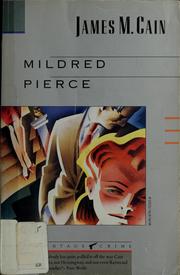
Mildred Pierce by James M. Cain

Summary:
Mildred Pierce had gorgeous legs, a way with a skillet, and a bone-deep core of toughness. She used those attributes to survive a divorce and poverty and to claw her way out of the lower middle class. But Mildred also had two weaknesses: a yen for shiftless men, and an unreasoning devotion to a monstrous daughter. Out of these elements, James M. Cain created a novel of acute social observation and devastating emotional violence, with a heroine whose ambitions and sufferings are never less than recognizable.

My take: 3 looks
First of all, if you have seen the movie, you have NOT experienced the book. Among other things, the book is a straight character study, and the movie is more action packed. Characters are removed and downplayed, and Veda is not quite the viper that she is in the book. But, most importantly, Monte does not die in the novel, and Veda never goes to jail. That portion of the story was invented by the filmmakers because the censorship code of the time required that evildoers be punished for their misdeeds. HBO recently redid the story, starring Kate Winslet, and it is said to be much truer to the novel.

With that being said, this was a doozy of a book. Mildred is a complex character. She doesn't take much off of her husband Bert, divorcing him quite early in the story, but will go back time and again to lesser men who care for nothing but a piece of her tail and some of her money. Yet she opens herself repeatedly to her eldest daughter Veda after numerous heinous verbal attacks. It is quite clear that Veda despises her mother through and through, evident to Mildred, but that makes Mildred only try harder to meet her expectations.

Veda is a viper of a daughter. She reminded me very much of Sarah Jane, a character in Imitation of Life. The difference is that Sarah Jane had some redemption at the end, although it was too late. Veda is a viper all the way through. She has firm respect for the one person who insults her to the core by letting her know that she has no talent at the piano. Everyone is furious with this man, but Veda inwardly admires him.

A very interesting character study, to be sure. But I have to wonder: what kind of characters are these? What is Cain trying to get across? That Mildred could survive, thrive and reinvent herself during and after the depression and Prohibition, only to crumble at the hands of her daughter? That mothers are gluttons for punishment? Did Ray stand for wholesomeness, which was crushed; while Veda stood for evil, which prospered?

And the men in their lives. Bert, who Mildred tossed away in favor of Wally, and later Monty, was the one stalwart  presence in her life, and she continued to go to him when she really needed advice. She had no respect for him, and yet he was the only one she respected.

I will ruminate on this one for months, I am sure. It was a very interesting book, and one that I recommend. If you read it, give me a call. We'll discuss it!

Thursday, May 1, 2014

Author Spotlight: Forgiving James Frey

A Million Little Pieces.jpgJames Frey is the author of A Million Little Pieces. It was published in 2003, and Oprah made him very rich when she chose it for her book club.

Summary:
Intense, unpredictable, and instantly engaging, A Million Little Pieces is a memoir of drug and alcohol abuse and rehabilitation as it has never been told before: through complete lies. Recounted in visceral, kinetic prose, and crafted with a forthrightness that rejects piety, cynicism, and self-pity, it brings us face-to-face with a provocative new understanding of the nature of addiction and the meaning of recovery.

 By the time he entered a drug and alcohol treatment facility, James Frey had taken his addictions to near-deadly extremes. He had so thoroughly ravaged his body that the facility's doctors were shocked he was still alive. The ensuing torments of detoxification and withdrawal, and the never-ending urge to use chemicals, are captured with a vitality and directness that recalls the seminal eye-opening power of William Burroughs's Junky.

But A Million Little Pieces refuses to fit any mold of drug literature. Inside the clinic, James is surrounded by patients as troubled as he is -- including a judge, a mobster, a one-time world-champion boxer, and a fragile former prostitute to whom he is not allowed to speak to but their friendship and advice strikes James as stronger and truer than the clinic's droning dogma of How to Recover. James refuses to consider himself a victim of anything but his own bad decisions, and insists on accepting sole accountability for the person he has been and the person he may become--which runs directly counter to his counselors' recipes for recovery. James has to fight to find his own way to confront the consequences of the life he has lived so far, and to determine what future, if any, he holds. It is this fight, told with the charismatic energy and power of One Flew over the Cuckoo's Nest, that is at the heart of A Million Little Pieces: the fight between one young man's will and the ever-tempting chemical trip to oblivion, the fight to survive on his own terms, for reasons close to his own heart. A Million Little Pieces is an uncommonly genuine account of a life destroyed and a life reconstructed. It is also the introduction of a bold and talented literary voice.

As you can see, it's pretty glowing.

The issue was that this book was published as a memoir, which was later proven to be false in that many of the items in the story were fabricated. Oprah was ticked. She called him out on her show. But not just Frey. When she was finished with him, she called his publisher to the stage. They were both eviscerated. It was so bad, as a matter of fact, that Oprah later apologized for blasting him so completely and publicly.

His agent dropped him. His publisher dropped him. His contract for additional books and a 7-figure deal were cancelled.

In 2009, Frey started a publishing company aimed at churning out commercially successful young adult novels, like "I Am Number Four". However, the contract that Frey had authors enter reeked of a sweatshop mentality. He was accused by NYMag of "abusing and using MFA students as cheap labor to churn out commercial young adult books".

With all of that said, is Frey a decent author? I can't say because I have refused to read any of his work on the basis of his previous deception and apparent traits of being a none-too-nice person. However, I am willing to bury my hatchet so I can see for myself whether or not he has talent.

I am hereby lifting the self-imposed ban on this author. However, I doubt will have drinks with him anytime soon.

Friday, April 25, 2014

Oranges Are Not the Only Fruit by Jeanette Winterson

Summary:
Winner of the Whitbread Prize for best first fiction, Oranges Are Not the Only Fruit is a coming-out novel from Winterson, the acclaimed author of The Passion and Sexing the Cherry. The narrator, Jeanette, cuts her teeth on the knowledge that she is one of God’s elect, but as this budding evangelical comes of age, and comes to terms with her preference for her own sex, the peculiar balance of her God-fearing household crumbles.

My take: 4 looks
Honestly, I am not sure what I think of this book. There is a lot going on. I will just start a stream-of-consciousness review...

This is a book about a Christian extremist mother, who emotionally dominates her husband, micromanages her adopted daughter and fawns over her pastor.

She is a real nut, and I have met her before. She is every fundamental-evangelical-puritan-type who abhors sin and is curiously drawn to and manipulated by it without being aware of its hold on her. She wants to support missionaries, but won't show common decency and love to her neighbors, singing hymns at the top of her lungs while they are "fornicating", in order to irritate them. She is all about church work, to the exclusion of her duties as a wife, mother, friend, etc. God is her excuse for almost everything.

On the other side of the coin, this book is about Jeanette, her adopted daughter. So entrenched is she in her mother's religious fervor that she alienates herself from classmates at the public school, which she is ordered by the court to attend. Her class projects all have religious subjects, and not always positive or loving references. This is a religion that thrives on fear.

However, something is happening to Jeanette...something that will forever mark her as full of demons and sinful.

It's no secret that this is a coming-of-age and coming-out novel about a young lesbian girl in a rigidly Christian household, and I have read that it is semi-autobiographical. To me, though, there is just too much going on. Coming out gay is tough enough, but couple that with a fanatical mother and it's almost too much to bear. I was not as much pulling for Jeanette as I was pulling for her mother's demise. I despised that woman.

Don't think this is a book about a gay woman. It's not. While her lesbian experiences were not closely examined, they were on the periphery, as well as interesting characters who helped Jeanette along the way. It's the relationship with her mother and her relationship with her faith that took center stage, and made for an intriguing story. The book is beautifully written, with wit and wisdom, expertly weaving Jeanette's magical alter-ego in and out of the prose. It is about being entrenched in a dogma and slowly finding out that there are other views and perspectives that deserve attention. It is about being crafted into one person and slowing breaking out of that shell to be who you truly are. It is about eating oranges all your life, and awaking your taste buds as you finally try other fruit.

Recommended.

Wednesday, April 23, 2014

Author Spotlight: Gabriel García Márquez 1927-2014

Gabriel García Márquez, the influential, Nobel Prize-winning author of "One Hundred Years of Solitude" and "Love in the Time of Cholera," has died.

He was 87.
 
García Márquez, a native of Colombia, is widely credited with helping to popularize "magical realism," a genre "in which the fantastic and the realistic are combined in a richly composed world of imagination," as the Nobel committee described it.
 
In a televised speech Thursday night, Colombian President Juan Manuel Santos declared three days of national mourning, ordering flags to be lowered to half-staff across the country.
 
The author -- known by his nickname "Gabo" throughout Latin America -- was born in the northern Colombian town of Aracataca, which became the inspiration for Macondo, the town at the center of "Solitude," his 1967 masterpiece, and referenced in such works as his novella "Leaf Storm" and the novel "In Evil Hour."
 
Considered one of the most significant authors of the 20th century, he was awarded the 1972 Neustadt International Prize for Literature and the 1982 Nobel Prize in Literature.

Tuesday, April 22, 2014

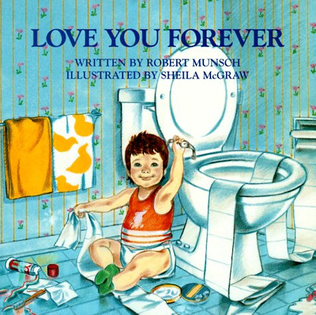
Creepy Book of the Day: Love You Forever by Robert Munsch


Summary:

A young woman holds her newborn son and looks at him lovingly. Softly she sings to him: "I'll love you forever. I'll like you for always. As long as I'm living, My baby you'll be" So begins the story that has touched the hearts of millions of Americans. Since publication in 1986, "Love You Forever" has sold more than 15 million copies in paperback and the regular hardcover edition (as well as hundreds of thousands of copies in Spanish and French).

My take:
I am going to lose some of you here. This book seems to be very polarizing, and I am on the "this book is hella creepy" end of it.

First, the mother holds her son as an infant. She holds him as all mothers do, in a rocker, gazing lovingly down as he sleeps in her arms.

It is a beautiful illustration and reminds mothers of all ages what it was like to be totally in love with your newborn.

That's when it starts to get weird.

Mom has an unnatural attachment to her child. She creeps in at night, evidently on her hands and knees, and peeks at him sleeping.

She gets him out of bed while he is asleep so she can hold him. Who knows what time it is. It may be 3am. She just feels that she needs to hold him. She probably can't sleep because he is too far away from her if she is in her bedroom and he is in his.

Poor kid.

He grows into the typical teenager, but you can see from this illustration that he probably needed to have his tail beat a little more often. If my teenage boy walked through the house at this age, leaving a wake of grime and dirt behind him, you had better believe that baseball glove in his hand would be replaced with a mop and dishcloth.

The boy finally gets his mama's breast out of his mouth and moves out. By the looks of the mother, this "boy" must be in his 40s. What does the mom do? Drives through town with a freaking ladder on the roof of her car. When she gets to his apartment, she puts the ladder outside his bedroom window,  because of course, it's the middle of the night, and climbs through the window so she can pick him up and rock him as he sleeps.

This poor woman is insane. As you can see from the picture, even the cat is trying to escape. And he must be medicated, because he is not waking up. And does she have on a dress? She climbed a ladder in a dress and Sunday shoes? Man, oh man.

 Mom eventually (and thankfully) gets old enough that she can no longer follow him and cradle him creepily in the middle of the night, so the son cradles her. What gives? This is a seriously codependent relationship. And where is her husband? He either left her craziness, or she killed him in his sleep.

I vote for the latter.

And the cycle continues...as the man-child now looks down at his poor, unsuspecting child.

Norman Bates, anyone?

The sequel could be called "I Love You to Death".

Friday, April 18, 2014

The Program by Suzanne Young

Summary:
In this “gripping tale for lovers of dystopian romance” ( Kirkus Reviews ), true feelings are forbidden, teen suicide is an epidemic, and the only solution is The Program.

Sloane knows better than to cry in front of anyone. With suicide now an international epidemic, one outburst could land her in The Program, the only proven course of treatment. Sloane’s parents have already lost one child; Sloane knows they’ll do anything to keep her alive. She also knows that everyone who’s been through The Program returns as a blank slate. Because their depression is gone—but so are their memories. Under constant surveillance at home and at school, Sloane puts on a brave face and keeps her feelings buried as deep as she can. The only person Sloane can be herself with is James. He’s promised to keep them both safe and out of treatment, and Sloane knows their love is strong enough to withstand anything. But despite the promises they made to each other, it’s getting harder to hide the truth. They are both growing weaker. Depression is setting in. And The Program is coming for them.

***SPOILER ALERT***

My take: 2.5 looks, rounding up to 3
Maybe it's because it has been a long time since I experienced teenage angst, as well as a teenage love affair, but I found this book to be very sophomoric. Yes, it is a Young Adult genre novel, but so is The Giver by Lois Lowry, and it is beautifully written.

Romantic? Not really, unless you are 14 years old.

Suspenseful? Not really, unless this is the first book you've ever read and have no idea what is going to happen.

It is written to read at a fast clip, but I still found it to be pandering and redundant.

There were some very real issues that I think the book could have tackled: Who is Realm, really? (I hope to know more in the sequel). Is there actually a suicide epidemic or is this merely common teenage angst? We all know that teens feel deeper and sharper, in part because of raging hormones, and have not yet developed the tools necessary to wade through these years. However, there did seem to be a mental issue that was somewhat contagious. And the fact that it has started to spread to adults by the end of the book was telling. I hope this is explored in the second (and final, from what I have read) in the series. I also hope Sloane's mother is explored more. She seemed to be complex and conflicted, and I would like to see how she comes to terms with what has happened in her life.

All in all, because the story held my attention, and I am interested in the ending of the saga, I am promoting this one to 2.5 looks. However, Young had a perfect opportunity to explore a very real and serious issue and decided to make it a Harlequin Romance Junior instead.

Can't recommend this one.

National Library Week: Libraries around the World


  Stuttgart City Library in Stuttgart, Germany-Designed by Korean architect Eun Young Yi, the new Stuttgart City Library opened in 2011 to mixed reviews from locals, library enthusiasts, and architects. It's been derided as a two-color Rubik's Cube, a block-shaped prison for books, and a sterile unfriendly environment. But with the funnelling staircases connecting the book-filled floors skyward and hidden cozy seating areas, I think it looks more like a less-fluffy heaven for nerds.
Stuttgart City Library in Stuttgart, Germany
Designed by Korean architect Eun Young Yi, the new Stuttgart City Library opened in 2011 to mixed reviews from locals, library enthusiasts, and architects. It's been derided as a two-color Rubik's Cube, a block-shaped prison for books, and a sterile unfriendly environment.

The sense of homogeneity generated by the facade with its nine-by-nine grid pattern is also reflected in the building’s “heart”: a 3,000 cubic metre space which, apart from a small water feature at the bottom, is entirely empty and is designed to allow visitors to forget the hustle and bustle of the world outside. Above the heart is located the light, funnel-shaped gallery room with its collection of quality literature, where the books literally blend into the architecture. Library users of migrant origin will find not only German books here, but also fiction in 25 different languages.

Taipei Public Library in Beitou, Taiwan
It's what is on the outside of this library that counts. The Beitou branch of the Taipei Public Library system was the first building in Taiwan to receive the highest EEWH rating possible—the diamond rating—making it the most eco-conscious building in the country. Built with wood from sustainably managed forests, the library also uses photovoltaic cells to generate power, has an insulating 20-centimeter layer of soil on the roof, and uses collected rainwater to flush the toilets. And books. They also have books.

St. Catherine's Monastery in South Sinai, Egypt
The monastery library preserves the second largest collection of early codices and manuscripts in the world, outnumbered only by the Vatican Library. It contains Greek, Arabic, Armenian, Coptic, Hebrew, Georgian, and Aramaic texts.

The oldest continually operated library in the world, St. Catherine's Monastery has been around since it was first built by the order of Byzantine Emperor Justinian I, sometime around 564 AD. It currently holds over 3,000 religious and educational manuscripts and approximately 8,000 printed books, including first editions of Homer and Plato.

Picture Book Library in Iwaki City, Japan
Built in 2005, the Picture Book Museum gave the preschoolers of Iwaki, Fukushima, a space to call their own. Turned off by the shhh-ing atmosphere of traditional libraries, the Picture Book Library's founder gave architect Tadao Ando free rein to create a space that would be inviting for children. His only order was to make sure the covers of the books were visible. The glass-walled and vibrant end result was celebrated as a new paradigm in educational spaces in Japan, and as an architectural masterpiece.

The library has been highlighted as one of the "25 Most Modern Libraries in the World".

A total of 6000 people visited the Picture Book Library in its first 10 months, often 200 on each public day and visitors have exclaimed of the building: “The museum is "architecture of light...the concrete feels so warm". Critics say "a tension-rich rhythm develops out brightly and darkly, from open and closed zones". "Like so many of his greatest buildings, it pulls off a remarkable illusion: the walls may be built from blocks of concrete, but, from the inside at least, the building feels as if its primary materials were light and air". "There is no dead end,” one blogger noted, and they were reminded of M. C. Escher

Also of note:
Boston Public Library in Boston, USA
Opened in 1848, the Boston Public Library is the second largest library in the United States, with over 24 million volumes. It was also the first public, free-to-all library, and the first to lend books out to patrons.

Royal Grammar School Chained Library in Guildford, England
Established in the early 1500s, the Royal Grammar School contains one of few remaining examples of the practice of chaining books to shelves. This allowed important or particularly useful books to be placed in communal areas for public perusal rather than locked away, paving the way for the public library system. Now the Headmaster's Study, the Chained Library holds books that date back to the late 1400s, including two early editions of Sir Isaac Newton's Principia.

McAllen Public Library in McAllen, Texas, USA
When the city of McAllen acquired an old retail property, they brought on Minneapolis-based architects Meyer, Scherer & Rockcastle, Ltd. to convert the space into a massive new public library that looks nothing like the Wal-Mart it once was. The largest single-story public library in the United States, the new McAllen Public Library now includes a massive children's area with one of the largest teen areas in the state, an art gallery, a 200-seat auditorium.

Bibliotheque Nationale in Paris, France
No expense was spared to carry out the library’s grand design, which many claimed defied logic. While books and historical documents are shelved in the sunny, 23-storey and 79m-high towers (shaped like half-open books), patrons sit in artificially lit basement halls built around a ‘forest courtyard’ of 140 50-year-old pines, trucked in from the countryside. The towers have since been fitted with a complex (and expensive) shutter system but the basement is prone to flooding from the Seine.

Thursday, April 17, 2014

National Library Week: Banned Books

You know, it is Parenting 101 that you should tell a child what he CAN do, and not what he CANNOT do.

Do you know why? Because everyone is a little bit of a rebel. When you tell him, "You can't...", what you are really doing is piquing his interest so that he will not be able to think of doing anything else.

It's human nature.

So, if you tell a reader a book that he can't read...that's all he is going to want to read.

Don't get me wrong. There is some trash out there. Books so poorly written that authors should pay you for the time you waste reading their refuse. There are books with explicit sex, strong offensive language, unchecked violence, and religious overtones galore. However, I say read them, if you like.

It is NOT my business, or anyone else's for that matter, to tell you what you can and can't read. As a mother, I can steer my younger children toward age-appropriate material, but I will not ban a book eternally. Once they are old enough, they can decide for themselves what they think of the subject matter.

With that said, you are going to guffaw at the most challenged book of 2013. Dav Pilkey's best-selling picture book series topped the list, just as his "Captain Underpants" did in 2012. The reasons cited included "offensive language" and material unsuited for its targeted age group.
 
I will allow that to sink in for a minute.

Now, I don't want to rant. I will tell you that the majority of book challenges come from parents (more specifically, moms). I don't have a problem at all with you telling your child that he can't read a particular book. But, do not tell mine that he can't. That's my decision.

Before I need another blood pressure pill, take a look at this site to get more information.

Here is an awesome timeline of banned books.

And the top 20 most challenged books of last decade:

1. Harry Potter (series), by J.K. Rowling
2. Alice series, by Phyllis Reynolds Naylor
3. The Chocolate War, by Robert Cormier
4. And Tango Makes Three, by Justin Richardson/Peter Parnell
5. Of Mice and Men, by John Steinbeck
6. I Know Why the Caged Bird Sings, by Maya Angelou
7. Scary Stories (series), by Alvin Schwartz
8. His Dark Materials (series), by Philip Pullman
9. ttyl; ttfn; l8r g8r (series), by Lauren Myracle
10. The Perks of Being a Wallflower, by Stephen Chbosky
11. Fallen Angels, by Walter Dean Myers
12. It’s Perfectly Normal, by Robie Harris
13. Captain Underpants (series), by Dav Pilkey
14. The Adventures of Huckleberry Finn, by Mark Twain
15. The Bluest Eye, by Toni Morrison
16. Forever, by Judy Blume
17. The Color Purple, by Alice Walker
18. Go Ask Alice, by Anonymous
19. Catcher in the Rye, by J.D. Salinger
20. King and King, by Linda de Haan

Wednesday, April 16, 2014

National Library Week: Melville Louis Kossuth Dewey


Parker Posey sums up nicely why we need the Dewey Decimal System!

About the man:
Melvil Dewey.jpg
Immediately after receiving his undergraduate degree, Dewey was hired to manage Amherst's library and reclassify its collections. He came up with a system of decimal numbers used to classify a structure of knowledge first outlined by Sir Francis Bacon.

Dewey copyrighted the system in 1876. This system has proved to be enormously influential and remains in widespread use.

In 1877, Dewey moved to Boston, where he founded and became editor of The Library Journal. The journal became an influential factor in the development of libraries in America, and in the reform of their administration. Dewey was also among the founders of the American Library Association.

Dewey became librarian of Columbia College in 1883. The following year, he founded the School of Library Economy—the first school for librarians ever organized. When Dewey relocated to Albany in 1889, he took the school with him. It eventually returned to Columbia in 1926. Dewey also served as director of the New York State Library from 1888 to 1906. During his tenure he reorganized the state library and established a system of traveling libraries and picture collections.

About the System:
The Dewey Decimal Classification organizes library materials by discipline or field of study. Main divisions include philosophy, social sciences, science, technology, and history. The scheme is made up of ten classes, each divided into ten divisions, each having ten sections. The system's notation uses Arabic numbers, with three whole numbers making up the main classes and sub-classes and decimals creating further divisions. The classification structure is hierarchical and the notation follows the same hierarchy. Libraries not needing the full level of detail of the classification can trim right-most decimal digits from the class number to obtain a more general classification. For example:
500 Natural sciences and mathematics
510 Mathematics
516 Geometry
516.3 Analytic geometries
516.37 Metric differential geometries
516.375 Finsler Geometry
 Is that gorgeous, or WHAT?! 

Tuesday, April 15, 2014

National Library Week: Types of Libraries


Did you know there are various types of libraries? Here is a cute graphic from the Baynet Library:


That sums it up nicely.

According to Wikipedia: The year 1876 is key in the history of librarianship in the United States. The American Library Association was formed, as well as The American Library Journal, Melvil Dewey published his decimal-based system of classification, and the United States Bureau of Education published its report, "Public libraries in the United States of America; their history, condition, and management." During the post-Civil War years, there was a rise in the establishment of public libraries, a movement led chiefly by newly formed women's clubs. They contributed their own collections of books, conducted lengthy fund raising campaigns for buildings, and lobbied within their communities for financial support for libraries, as well as with legislatures and the Carnegie Library Endowment founded in the 20th century. They led the establishment of 75–80 percent of the libraries in communities across the country.

I have visited the Carnegie Library of Atlanta, nee The Young Men's Library Association, and now the Atlanta Fulton County Library. These arches form a square in downtown Atlanta, and are from the original Carnegie Library, as are known as the "Carnegie Education Pavilion".

According to the library historian on the 5th floor of the library, the remaining arches from the Carnegie Library reside in a landfill, waiting to be restored and used.

I can imagine that it was a beautiful building.

On a side note, Gone with the Wind author Margaret Mitchell's father was the president of The Young Men's Library Association. The reader doesn't fall far from the bookmobile!